
Why Your Oklahoma Bermuda Lawn Stalled Out in June: 4 Common Reasons
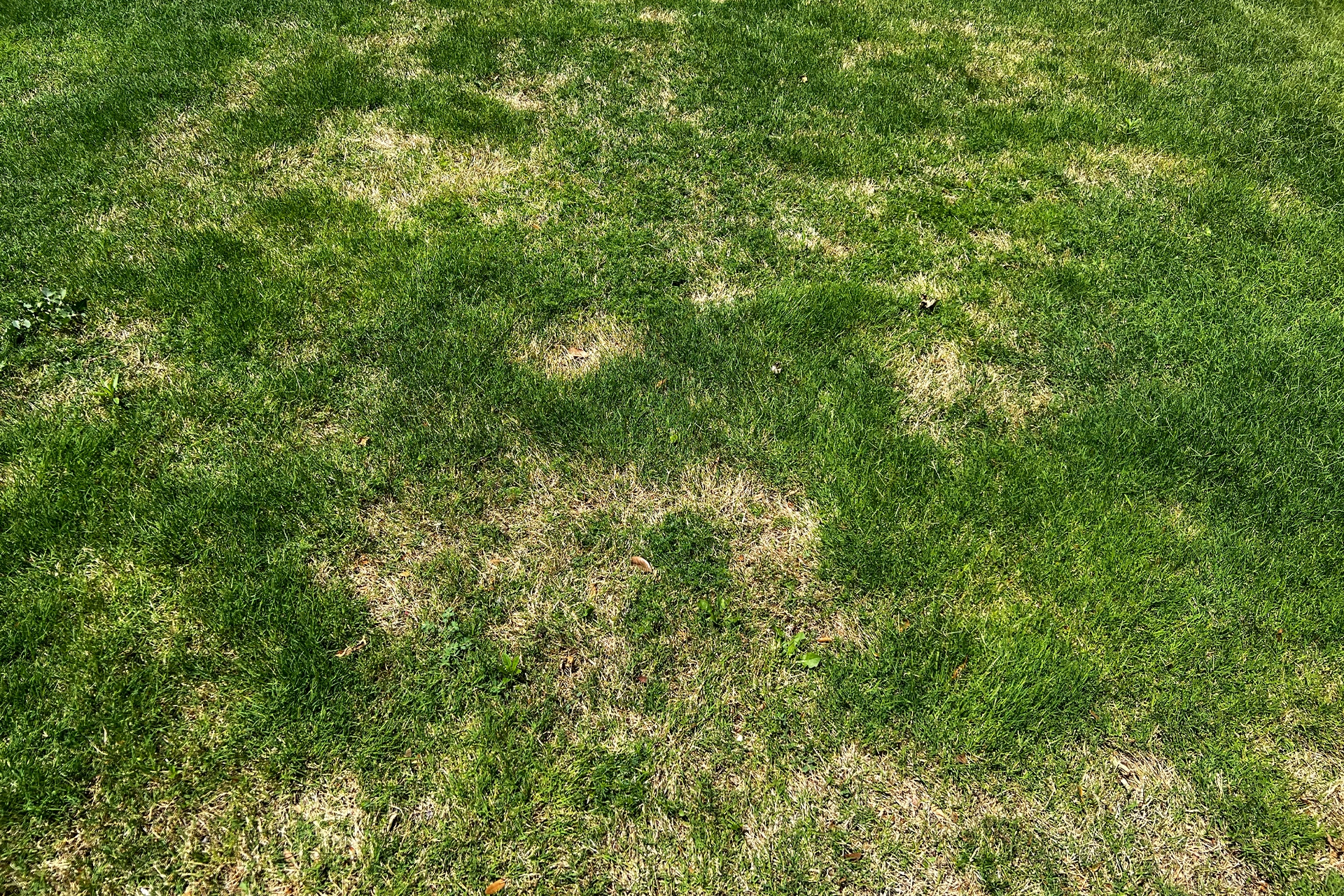
Short Answer: If your Bermuda lawn looked great in May and then suddenly stalled in June, the cause is almost always one of four things: shallow watering that finally caught up with the lawn, compacted soil that cannot deliver air or moisture to deeper roots, an early-season nitrogen surge that pushed soft growth the roots cannot support, or pest pressure (chinch bugs or early grub adults) that is quietly building. Each one has a different fix and the wrong response can make things worse. Diagnose first, treat second. June is still recoverable.
If you have spent a few weeks watching your Bermuda lawn that was thick and dark in May start losing color and looking tired in early June, you are dealing with one of the most common issues we see across the OKC metro and Northwest Arkansas. It is frustrating because the lawn was doing great. Now suddenly it is not, and most of the obvious responses (water more, fertilize more) usually make the problem worse rather than better.
We want to walk you through what is actually happening underground and how to figure out which of the four most common causes applies to your specific lawn. Veteran-owned operations like ours have seen these patterns repeatedly across thousands of Oklahoma lawns, and the right diagnosis usually points to a clear fix.
Reason One: Shallow Watering Finally Caught Up
This is the most common reason for a May-to-June Bermuda stall. If you have been running daily 15-minute irrigation cycles all spring, your Bermuda roots have settled into the top inch and a half of soil. As long as spring temperatures kept the surface soil moist and cool, the lawn was fine. June changes that. Surface soil now dries by mid-morning during a hot stretch. The shallow roots have nowhere to go for water. The lawn starts wilting in the early afternoon and brown patches start showing up.
The diagnostic clue is the pattern. Lawns with shallow watering issues show footprints that stay visible for hours after walking on the grass. The blades take on a blue-gray cast. The browning happens evenly across exposed areas first, with shaded zones holding up longer.
The fix is permanent and easy. Switch to two cycles per week, applied in early morning, delivering about half an inch each. The lawn will look slightly worse for a week as roots reach down, then recover with much better drought tolerance for the rest of the season.
Reason Two: Compacted Soil
Bermuda is aggressive about lateral spread but it cannot drive runners into compacted clay. Most OKC area soils are clay-heavy, and most yards have not been aerated in years (if ever). Compaction symptoms accumulate slowly: water runs off rather than soaks in, the screwdriver test stops at 2 inches, the lawn feels hard underfoot, and thin areas show up in the same spots year after year.
The diagnostic clue is the pattern in space. Compacted areas are predictable. They show up where foot traffic concentrates, where equipment parks, where the soil was disturbed during construction. The same spots get thin every June.
The fix is core aeration. June is actually a fine month to aerate warm-season grass in our area because Bermuda is in peak growth and recovery is fast. Combine aeration with a light topdressing of compost where soil organic matter is low, and you will see meaningful improvement by mid July.
Reason Three: Early-Season Nitrogen Surge
If you fertilized heavily in late March or April, the lawn produced a flush of soft, lush growth on a root system that had not yet rebuilt from winter. May still felt fine because temperatures were mild. June heat exposed the imbalance. Soft top growth cannot support itself when temperatures hit the 90s. The lawn drops the excess, which shows up as patchy thinning and yellowing.
The diagnostic clue is fertilizer history. If you remember applying a high-nitrogen product in spring (especially a weed-and-feed with high N), this is the likely cause.
The fix is patience. Do not add more nitrogen. Drop to a moderate slow-release summer fertilizer with potassium, water deep and infrequent, and let the lawn rebalance. Recovery usually takes 4 to 6 weeks.
Reason Four: Building Pest Pressure
Chinch bugs and June bug larvae (the grubs that will hatch in late summer) are both building populations right now. Early chinch bug activity shows up as small yellow patches in the hottest sunniest parts of the lawn. Adult June bugs flying around your porch lights at night are the egg-laying generation that will produce damaging grubs in August.
The diagnostic clue for chinch bugs is the soap flush test. Pour soapy water on a square foot at the boundary between green and yellowing grass. Surfacing bugs within 5 minutes confirm chinch bugs are present.
The diagnostic clue for grubs is harder because the damage has not happened yet. Properties with grub damage history are at high risk this year unless you preventively treat. Properties with no history are lower risk but still worth considering.
Treatment for confirmed chinch bugs is a targeted insecticide. Treatment for grubs is a preventive granular application in late June or early July.
What If More Than One Cause Applies?
Multiple causes often happen simultaneously. A lawn with both shallow watering and compaction shows worse symptoms than either alone. Diagnose carefully and address the underlying issues in priority order: watering first because it is free and reversible, then soil compaction, then fertility balance, then pest treatment as needed.
What Not to Do
Do not panic-water. Daily short cycles on a struggling lawn worsen the root system and accelerate decline. The fix for shallow watering is deeper watering, not more frequent watering.
Do not pile on nitrogen. Bermuda fighting a stress problem cannot benefit from more growth pressure. Moderate slow-release applications are the right pace through summer.
Do not assume disease is the cause without confirming. Fungicide on a non-disease problem is wasted money.
Do not wait for August to address what you can see in June. Every additional week of decline reduces what is achievable this season.
One More Pattern Worth Watching: Heat-Related Crown Damage
Beyond the four causes above, a less common but real issue we see on Oklahoma Bermuda lawns is heat-related crown damage from mowing too short during a hot stretch. If you scalped the lawn in late spring and then hit a stretch of 95-degree days, the exposed crowns may have taken damage that does not show up until June. The diagnostic clue is patterns that match recent mowing direction or specific high-spots on uneven ground. The fix is to raise the mowing height to the upper end of the Bermuda range (3 inches), avoid mowing more than one third of the blade in a single cut, and give the lawn time to recover. Crown damage usually grows back from runners within 4 to 8 weeks.
Frequently Asked Questions
How long until I see improvement after fixing the cause?
Watering correction: visible improvement in 2 to 3 weeks. Soil compaction (after aeration): 4 to 6 weeks. Nitrogen rebalance: 4 to 6 weeks. Pest treatment: spread stops within days, recovery 4 to 8 weeks.
Should I aerate in June or wait for fall?
For warm-season Bermuda in our area, June is a viable window. Lawns that need it most (significant compaction, repeated thin spots, water runoff) benefit from June aeration. Lawns with mild symptoms can wait for early fall.
Can a stalled June lawn fully recover by August?
In most cases yes, if the correct cause is identified and addressed quickly. Lawns where the cause is misdiagnosed often continue to decline through summer.
Do I need a professional to diagnose this?
For straightforward cases (clear pattern, single cause), a homeowner can often identify and fix the issue. For lawns with multiple causes or uncertain symptoms, a professional walk through with a soil test usually resolves it.
The Recovery Timeline You Should Expect
If you fix the underlying cause in June, here is the visible improvement timeline most lawns follow. Week 1 to 2: any decline stops. The lawn stabilizes. Week 3 to 4: color starts to return in the unaffected portions. Week 5 to 8: thin areas begin filling from surrounding healthy turf. Week 9 to 12: by Labor Day, most lawns are back to looking like they did in mid May or better. Recovery from June stalls is one of the more reliable outcomes in lawn care because you have plenty of growing season ahead. Lawns where the problem is not caught until late August or September often take until next spring to fully recover.
What to Do Next
If your Bermuda has stalled and you want a professional read on the cause, we are glad to come walk the property. We will identify what is happening, recommend the right combination of fixes, and tell you straight what is realistic for the rest of the season.
As a veteran-owned company, we approach diagnostic work with the same straightforwardness we expect from our customers. No upselling. No fear-based pitches. Just an honest assessment of what your lawn needs.
Call us at 405-735-1223 or visit weedcontrolokc.com to schedule. We serve Oklahoma City, Edmond, Norman, Moore, Siloam Springs, Bentonville, Rogers, and surrounding communities across the OKC metro and Northwest Arkansas.