
Sod vs. Seed in OKC and Northwest Arkansas: Which Makes Sense for a New or Struggling Lawn?
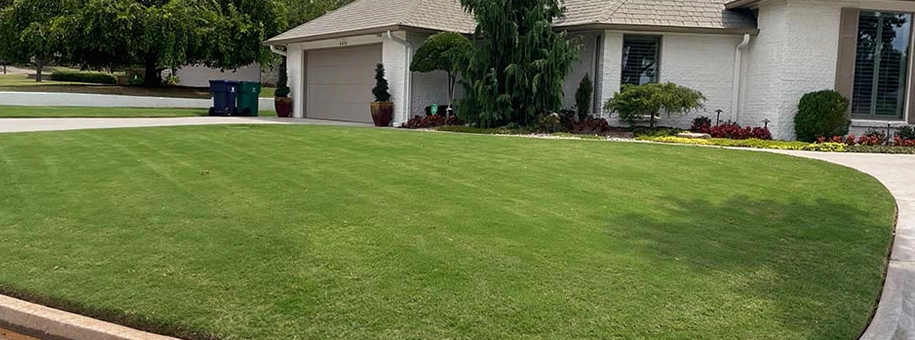
Short Answer: In the OKC and NWA transition zone, the sod-versus-seed answer depends heavily on your grass type. Warm-season Bermuda and Zoysia are usually established by sod, sprigs, or plugs, since seed is slow and limited, while cool-season fescue is typically established by seed in the fall. Sod gives you an instant, finished lawn at a higher up-front cost; seed costs less but takes time, patience, and consistent watering. The right choice comes down to grass type, budget, how fast you need a lawn, and the season. Here is a veteran-owned, straight comparison so you can decide.
When a lawn is failing or you are starting from scratch in Oklahoma City or Northwest Arkansas, the question comes up fast: do you sod it or seed it? It is a fair question with real money behind it, and the honest answer in our transition zone is more nuanced than a simple this-or-that, because it depends a lot on what grass you are putting down.
We are a veteran-owned operation, and we would rather give you the straight trade-offs than push you toward whichever option pads a bill. Both sod and seed produce good lawns when they fit the situation. The trick is matching the method to your grass type, your budget, your timeline, and the season. Here is how we walk homeowners through the decision.
Start With Your Grass Type, Not the Method
In the transition zone the most important factor is which grass you are establishing, because it largely dictates whether seed is even a practical option. Warm-season grasses and cool-season grasses behave completely differently, and lumping them together is where a lot of confusion starts.
Bermuda and Zoysia, the warm-season grasses that cover most full-sun OKC and NWA lawns, are usually established by sod, and for Bermuda also by sprigs or plugs. Bermuda can be seeded, but the common improved varieties are not available as seed, seeding is slow, and the window is narrow, so sod is the dependable route for a finished warm-season lawn. Fescue, the cool-season grass many homeowners use in shadier yards, is the opposite: it is typically and economically established by seed, sown in the fall. So before comparing cost and speed, settle which grass fits your yard, because that frames everything else.
What Seeding Involves
Seeding establishes new grass from seed, and in our area that mostly means fescue sown in the fall, or overseeding thin areas. It is the more affordable path per square foot, because you are paying for seed and labor rather than farm-grown turf and heavy installation.
The catch with seed is time and water. After the seed goes down, the seedbed has to stay consistently moist for the first weeks of germination and establishment, and if it dries out during that window, you lose the seedlings. Seeding also means waiting: several weeks for real coverage and a full season before the lawn is mature. Done right, in the fall, fescue seeding produces an excellent transition-zone lawn for shadier properties. The trade is patience and a watering commitment you cannot skip.
What Sod Involves
Sod is mature grass grown on a farm, harvested with its roots and a thin layer of soil, and laid down on prepared ground like a carpet. Its appeal is immediate: you go from bare dirt to a green, finished lawn in a day. In our area, sod is the standard way to put down a warm-season lawn like Bermuda or Zoysia, and it is the choice when you need a usable lawn fast or are dealing with a slope where seed would wash away.
Sod still needs proper groundwork and care. The soil underneath has to be graded and prepared, the pieces laid tightly with no gaps, and then watered carefully for the first couple of weeks so the roots knit into the soil below. It is not finished just because it looks finished on day one. And it costs more up front than seed, because you are paying for mature turf plus the heavier labor to install it. What you buy with that premium is speed and certainty.
The Honest Cost and Timing Trade-Off
Per square foot, sod costs more than seed, often by a wide margin once installation labor is included, while seed is the budget-friendly route for the areas where it is practical. But the cheaper option is only a deal if it fits. Seeding a full-sun Bermuda lawn from generic seed, for example, tends to disappoint, while sodding it produces a real lawn. Spending less on the wrong method is not saving money.
Timing also drives the decision in the transition zone. Fescue seeding belongs in the fall, when cool-season grass establishes best, which is exactly why late summer is the time to plan a fall seeding project. Warm-season sod establishes best during the active growing season, when the Bermuda or Zoysia can root in. Matching the method to the right season is as important as the method itself, and trying to force either one outside its window is how projects fail.
Which One Fits Your Situation
Here is the short version of how we frame it. If you want a full-sun warm-season lawn, need a finished result quickly, are dealing with erosion-prone slopes, or are putting a property on the market, sod is usually the right call, and for Bermuda, plugs or sprigs can be a lower-cost middle path that fills in over time. If you have shadier areas suited to fescue, a flexible timeline, the budget consciousness that favors seed, and the willingness to keep a seedbed watered through fall establishment, seeding is the economical and effective route.
And plenty of transition-zone properties use both: sod or plugs for the full-sun warm-season areas and fescue seed for the shade. There is no rule that the whole yard has to be one method, and mixing them to fit each area is frequently the smartest use of a budget. The point is to decide deliberately, based on grass type, conditions, and season, rather than defaulting to whatever sounds cheapest or fastest in the moment.
Frequently Asked Questions
Can I just seed Bermuda instead of sodding it?
Sometimes, but with real limits. Common improved Bermuda varieties are not sold as seed, seeded Bermuda establishes slowly, and the window is narrow, so for a dependable full-sun lawn sod, sprigs, or plugs are the usual routes. Seed can work for certain common Bermuda types but often disappoints compared to sod.
When should I seed fescue in OKC or NWA?
Fall is the window, which is why late summer is the time to plan it. Cool-season fescue establishes best as the weather cools, giving the seedlings a long, mild stretch to root before facing summer. Spring or summer seeding of fescue is far riskier in our climate.
Is sod worth the extra cost?
For warm-season lawns and for situations needing speed or erosion control, often yes, because it is the dependable way to get that lawn and it skips the establishment gamble. For shade areas suited to fescue on a flexible timeline, seed usually delivers better value. The right answer depends on grass type and your priorities.
What if only part of my lawn is bad?
Then you likely do not need a whole-yard project. Sodding or plugging a damaged warm-season area, or overseeding thin fescue in the fall, is often all that is required. A walk-through is the best way to see how much actually needs work and which method fits each area.
The Bottom Line
Sod versus seed is not a single answer in the OKC and NWA transition zone; it is a decision that starts with your grass type and runs through budget, timeline, and season. Warm-season lawns usually mean sod, sprigs, or plugs; fescue usually means fall seed; and many yards sensibly use both. Decide based on what actually fits your property, time it to the right season, and you get a lawn that takes rather than one you have to redo. If you want a straight recommendation for your yard, that is exactly the kind of call we are glad to make.
What to Do Next
If you are deciding between sod and seed for a new or struggling lawn, we are glad to walk the property, talk through grass type and timing, and give you an honest recommendation, including whether a mix of methods is the smarter use of your budget.
As a veteran-owned company we approach every property the way we expect work to be approached when we are the customer: straight assessment, clear recommendation, honest pricing. No upselling, no fear-based pitches.
Call us at 405-735-1223 or visit weedcontrolokc.com to schedule. We serve Oklahoma City, Edmond, Norman, Moore, Siloam Springs, Bentonville, Rogers, and surrounding communities across the OKC metro and Northwest Arkansas.