Armyworm Outbreak Signs In OKC And Northwest Arkansas Lawns: What To Watch For Now
Elite Lawn Care • July 2026 • Oklahoma City, OK & Siloam Springs, AR
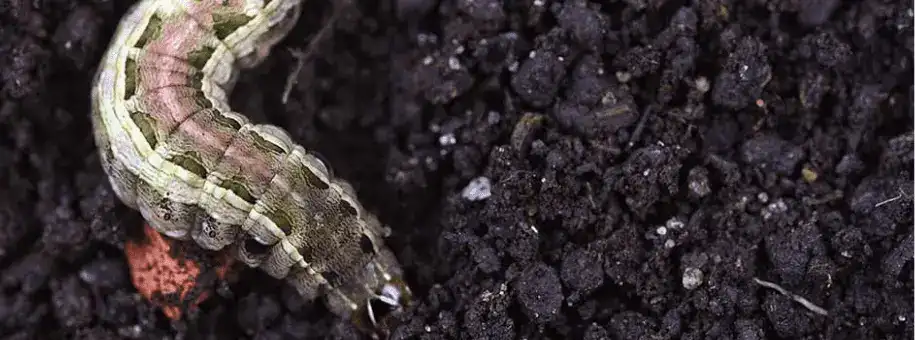
Armyworm outbreaks in OKC and Northwest Arkansas can take a healthy Bermuda lawn from full color to bare blades in 48 hours, and most homeowners do not catch them until the damage is already extensive. The early signs are subtle: a sudden increase in bird activity pecking at the lawn, brown patches that look like drought damage but appear overnight, and tiny green caterpillars visible at the soil line in the morning.
Why Armyworms Hit So Hard, So Fast
Armyworms are the pest we get the most emergency calls about every year — and the one most homeowners do not recognize until the lawn is already half stripped. We have walked properties in OKC and Siloam Springs where the lawn was full and green Saturday morning and bare brown stubble by Monday evening. Armyworms work that fast.
The Moth Behind The Damage
Fall armyworms (Spodoptera frugiperda) are the larval stage of a brown moth that migrates north from the Gulf coast every year. In a normal year they reach Oklahoma and Arkansas by mid to late July and stay active through September. Heavy migration years bring them in late June.
Explosive Population Growth
A single moth lays 1,000 to 2,000 eggs at a time. Eggs hatch in two to three days. By the fifth and sixth instars, a single larva consumes up to 80% of its total lifetime food intake. Hundreds of larvae per square yard can strip an acre overnight.
The 48-Hour Window
A lawn hit with young larvae can be treated and saved with minimal damage. A lawn hit with sixth instar larvae has often already lost most of the canopy by the time treatment kicks in. Catching the outbreak in the first two days is everything.
The Early Warning Signs Most Homeowners Miss
🐦 Unusual Bird Activity
Robins, grackles, starlings, and blackbirds know what armyworms are. When a population is present, birds work the lawn aggressively at all hours. If you see five or more birds pecking your lawn for several days running, scout that evening.
🟤 Overnight Brown Patches
Armyworms feed at the base of the blade. The first damage looks like drought stress but appears overnight. You may notice windowpaning — semi-transparent patches — that progresses to full blade stripping within a day. The pattern often starts at property edges.
🐛 The Larvae Themselves
Green to brown to gray, with three dark stripes and an inverted Y mark on the head. Length ranges from a quarter inch (early instar) to an inch and a half (late instar). Most visible at dawn and dusk. Mid-day they hide in the thatch.
How To Scout For Armyworms (10 Minutes)
The standard soap flush test confirms or rules out an outbreak quickly. You need dish soap, a gallon jug, and a tape measure.
Step 1: Mix
Mix two tablespoons of dish soap into a gallon of water. Mark off a one-foot by one-foot square on the lawn in an area where you suspect activity — near bird activity, edge damage, or windowpaning.
Step 2: Pour & Wait
Pour the soapy water slowly across the square so it soaks in. Wait three to five minutes. Armyworms and surface-feeding insects will surface from the thatch when the soap irritates them.
Step 3: Count
3+ larvae per sq ft = treatment threshold. 5+ = active outbreak. 10+ = heavy infestation, damage is already happening fast. Repeat in two or three spots to confirm, then treat immediately if above threshold.
What To Apply When You Confirm An Outbreak
Pyrethroid (e.g. Bifenthrin)
Fast knockdown within 24 hours and residual control for two to three weeks. Best for confirmed outbreaks above threshold. Apply in the evening and water in lightly — about a quarter inch — to move the product into the surface zone.
Spinosad-Based Products
Ideal for early outbreaks or homeowners who prefer a selective product. Lower impact on beneficial insects. Takes 36–48 hours for full effect but provides excellent control during the active feeding window.
Pyrethroid + Chlorantraniliprole
For severe outbreaks where damage is already extensive. The granular chlorantraniliprole provides longer residual control and helps prevent a second generation from establishing on the same property.
Evening application is the best window. Treat at 7 PM when larvae are actively feeding. If you cannot treat in the evening, apply before 8 AM. Never apply during the heat of the day.
What To Expect After Treatment
First 24 Hours
A labeled pyrethroid applied during active feeding kills most surface larvae within 12 to 24 hours. By the second morning, a soap flush test should show no live larvae. The canopy damage already done is permanent but Bermuda recovers from runners.
Watch For A Second Wave
Egg masses laid before treatment continue to hatch for a few days after the first round. Scout again at 7 days. Apply a second treatment if larvae are again above threshold. In heavy outbreak years, three treatments across the summer is not unusual.
Lawn Recovery
Bare patches fill in from Bermuda runners within four to eight weeks during the growing season. Water deeply twice a week, hold fertilizer for two weeks post-treatment, then resume summer feeding. For severe crown loss, plug or sprig the worst areas in late August.
Frequently Asked Questions
How Long Does Armyworm Season Last?
Active armyworm pressure in our area typically runs from mid-July through late September, with peak risk in August. Scout weekly during that window.
Will A Regular Lawn Program Catch Armyworms?
Most standard programs don't include automatic armyworm coverage because outbreaks are unpredictable. Our customers on programs get scouted during regular visits and treated when threshold is confirmed — usually included for active customers.
Are Armyworms Dangerous To Pets Or Kids?
The larvae themselves are not toxic. The insecticides used for treatment require pets and kids to stay off the treated area until it dries — usually two to four hours.
Why Are Some Years Worse Than Others?
Armyworm migration is driven by southern weather patterns. Years with mild conditions in their overwintering range and favorable northward winds produce heavy migration. Oklahoma State Extension and the University of Arkansas post seasonal advisories.
Suspect Armyworm Activity? We Respond Fast.
As a veteran-owned company, we are set up to respond fast on outbreak weeks. We can do a scout visit and treat the same day if threshold is confirmed. We serve Oklahoma City, Edmond, Norman, Moore, Siloam Springs, Bentonville, Rogers, and surrounding communities across the OKC metro and Northwest Arkansas.