Liquid Vs Granular Fertilizer: What Works Best On Oklahoma Lawns
Elite Lawn Care • May 2026 • Oklahoma
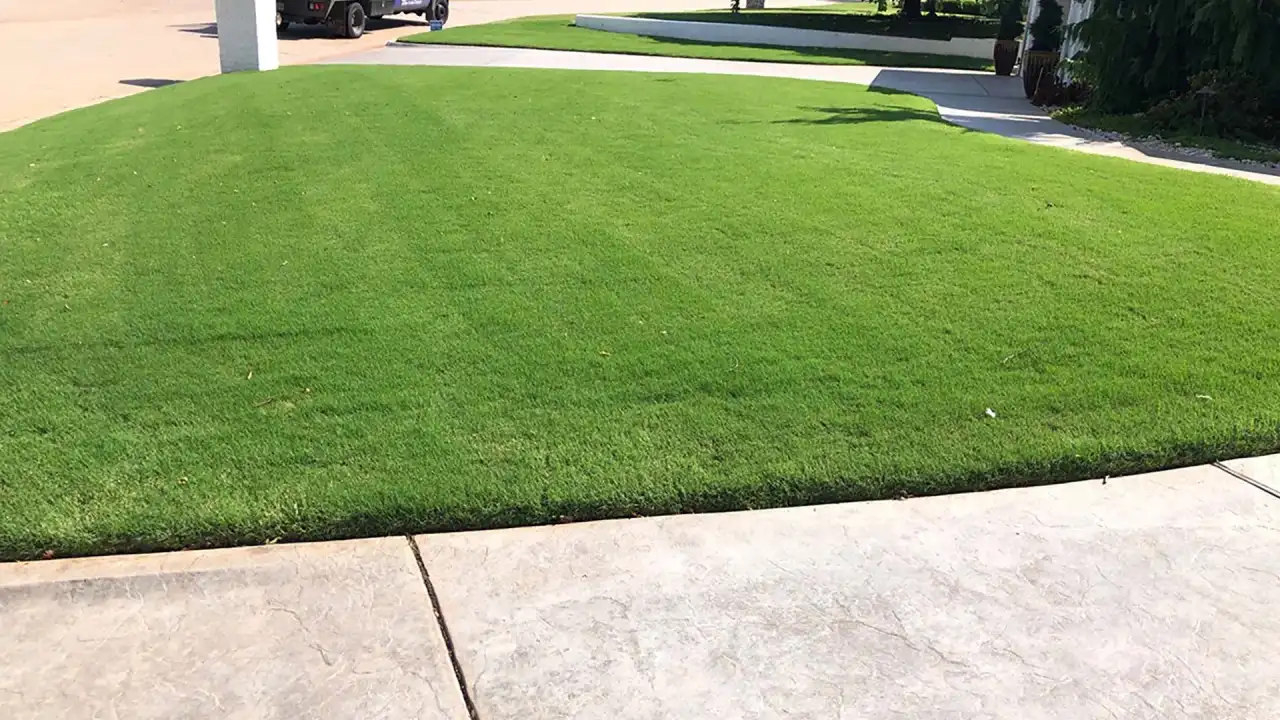
Both liquid and granular fertilizers work well on Oklahoma lawns when applied correctly. Liquid fertilizers absorb faster and produce quicker visible results but the effects fade sooner, requiring more frequent applications. Granular fertilizers release more slowly and feed the lawn over weeks, providing steadier nutrition with fewer applications. The best lawn programs typically use both: granular as the foundation for steady feeding, plus liquid spot applications when the lawn needs a quick boost or specific nutrient correction.
The Honest Tradeoff
Some companies are 100 percent liquid. Others are 100 percent granular. Both groups will tell you their approach is better. The honest truth is that each has strengths, each has weaknesses, and the right choice depends on what the lawn actually needs at a given moment. As a veteran-owned lawn care company serving Oklahoma City, Norman, Edmond, Siloam Springs, and Northwest Arkansas, we have applied a lot of both.
What Liquid Fertilizer Does Well
Speed
Liquid fertilizer absorbs through leaf blades within hours and roots within a day or two. Grass starts greening up within 3 to 7 days — ideal before an event or for quick recovery from stress.
Uniform Coverage
A calibrated liquid spray covers every blade evenly. Granular spreaders can miss spots or double up depending on operator skill and equipment condition.
Combines With Other Treatments
Liquid lets us combine fertilizer with weed control or other applications in a single visit, reducing the number of separate treatments needed.
What Liquid Fertilizer Struggles With
Effects Fade Faster
Most liquid fertilizer is fully used up within 2 to 4 weeks, requiring more frequent visits and more product over a season.
Weather Sensitivity
Heavy rain within 24 hours can wash off product. Hot weather speeds up volatilization. Application requires good weather windows.
No Slow-Release Feeding
Liquid forms deliver a quick pulse of nutrients rather than steady feeding over weeks. Less suited to sustained lawn nutrition on its own.
What Granular Fertilizer Does Well
Longevity
A single granular application feeds the lawn for 6 to 8 weeks. Most lawn programs use granular as the foundation because fewer applications mean lower cost and less disruption.
Steadier Growth
Steadier feeding produces steadier growth. The lawn avoids the pulse-and-fade pattern that frequent liquid applications can create. Color and density develop evenly over time.
Heat & Humidity Reliable
Granular works well in heat and humidity where liquid efficacy can suffer. As long as it gets watered in, granular performs reliably through Oklahoma summers.
What Granular Fertilizer Struggles With
Slower Visible Results
Don't expect dramatic green-up in 3 days. Most granular applications take 7 to 14 days for noticeable color change.
Watering Dependency
Granular needs to be watered in within 24 to 48 hours. If it sits dry on hot blades, concentrated product on the leaves can cause fertilizer burn.
Less Precise Targeting
Spot applications for specific nutrient deficiencies are harder with granular. You need a different product entirely rather than just adjusting the spray mix.
How We Use Both
Most of our customers in Oklahoma and Arkansas are on programs that use granular as the base and liquid as supplements. The granular goes down 4 to 6 times a season and provides steady feeding.
Faster Green-Up Needed
When the lawn needs faster green-up than granular alone can provide, we supplement with a targeted liquid application.
Nutrient Correction
Chelated iron for chlorosis, micronutrient packages for deficient soils — liquid allows precise correction that granular cannot match.
Stress Recovery
After disease, drought, or damage repair, liquid fertility gets the lawn recovering faster than waiting for granular to slowly release.
Combined Spray Visits
When weed control or fungicide is being applied, we can include a fertility component in the same spray to reduce separate treatment visits.
Common Mistakes With Both
No Water After Granular
Applying granular without watering it in causes burn within days because concentrated product sits on dry blades.
Liquid In Heat
Product evaporates before it can absorb. Apply liquid early morning when temperatures are below 80 degrees.
Applying Too Much
Both forms can damage the lawn at high rates. Always follow the label. More is not better with fertilizer.
Dirty Equipment & Bad Mixes
Residual herbicide in spreaders or sprayers can damage the next lawn. Some liquid fertilizers and herbicides are also incompatible — read the labels.
Organic Vs Synthetic: A Quick Note
Both liquid and granular come in organic and synthetic forms. Organic versions release more slowly and feed soil microbes alongside the grass, but cost more and produce less dramatic visible results. Synthetic forms are faster, cheaper, and more efficient on a per-pound basis.
For Oklahoma lawns, we typically recommend a hybrid approach: synthetic for the bulk of fertility, organic amendments for soil building when soil tests indicate deficiencies in organic matter. Pure organic programs are available for homeowners who prioritize that approach but require more applications and higher cost.
Ready To Get The Right Program For Your Lawn?
We serve Oklahoma City, Norman, Edmond, Siloam Springs, and Northwest Arkansas. We use both liquid and granular professionally and will match the right tool to your lawn rather than push one product type. Reach out anytime.