
Armyworm Outbreak Signs in OKC and Northwest Arkansas Lawns: What to Watch For Now
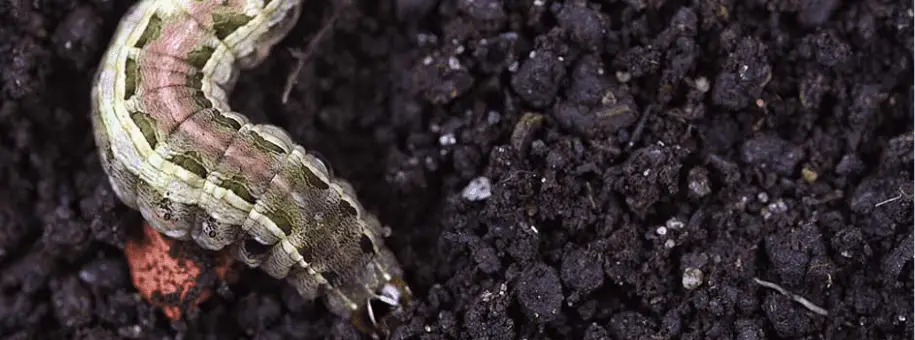
Short Answer: Armyworm outbreaks in OKC and Northwest Arkansas can take a healthy Bermuda lawn from full color to bare blades in 48 hours, and most homeowners do not catch them until the damage is already extensive. The early signs are subtle: a sudden increase in bird activity (especially robins and grackles) pecking at the lawn, brown patches that look like drought damage but appear overnight, and tiny green caterpillars visible at the soil line in the morning. The treatment is straightforward if you catch it early. Scout daily during outbreak weeks, apply a labeled product the day you confirm, and reseed or let runners fill in the bare ground.
Armyworms are the pest we get the most emergency calls about every year and the one most homeowners do not recognize until the lawn is already half stripped. We have walked properties in OKC and Siloam Springs where the lawn was full and green Saturday morning and bare brown stubble by Monday evening. Armyworms work that fast. The good news is they are easy to identify, easy to treat, and easy to recover from if you catch them in the first 48 hours of activity.
We are a veteran-owned operation. The guidance below is the same scouting protocol and treatment plan we use on the lawns we manage. We are sharing it because armyworms are too damaging to leave a homeowner without good information during the active window.
What Armyworms Are and Why They Hit So Hard
Fall armyworms (Spodoptera frugiperda) are the larval stage of a brown moth that migrates north from the Gulf coast every year. In a normal year they reach Oklahoma and Arkansas by mid to late July and stay active through September. In heavy migration years they arrive in late June and produce two or three overlapping generations across the rest of the season.
The reason they cause so much damage so fast is biology. A single moth lays 1,000 to 2,000 eggs in a mass of 100 to 200 at a time, usually on the underside of leaves, on lawn edging, on fences, or on building surfaces near the lawn. The eggs hatch in two to three days. The first instar larvae are tiny, less than an eighth of an inch, and they feed lightly for the first few days. By the time they reach the third instar, they are eating heavily. By the fifth and sixth instars, a single larva can consume up to 80 percent of its total lifetime food intake. A heavy infestation with hundreds of larvae per square yard can strip an acre overnight.
This is why catching the outbreak in the first two days is so important. A lawn hit with young larvae can be treated and saved with minimal damage. A lawn hit with sixth instar larvae has often already lost most of the canopy by the time the treatment kicks in.
The Early Warning Signs Most Homeowners Miss
The first sign of an armyworm outbreak is almost always a sudden change in bird behavior. Robins, grackles, starlings, and blackbirds know what armyworms are. When a population is present, the birds work the lawn aggressively, pecking and walking the turf at all hours of the day. If you see five or more birds working your lawn for an extended period for several days running, scout the lawn that evening.
The second sign is the appearance of brown patches that look like drought stress but appeared overnight. Armyworms feed at the base of the blade. The first damage looks like windowpaning (semi-transparent patches where the larvae have scraped the leaf surface but not bitten through). Within a day this progresses to blade clipping and full stripping. The pattern is irregular, often starting at the edges of a property near where the egg masses were laid.
The third sign is the larvae themselves. They are green to brown to gray, with three dark stripes running the length of the body and an inverted Y mark on the head. Length varies from a quarter inch (early instar) to an inch and a half (late instar). They are most visible at dawn and dusk when they are actively feeding. Mid day they hide in the thatch and are harder to spot.
How to Scout for Armyworms
The standard scouting method takes 10 minutes and confirms or rules out an outbreak. You need a dish soap, a gallon jug, and a tape measure.
Mix two tablespoons of dish soap into a gallon of water. Mark off a one-foot by one-foot square on the lawn in an area where you suspect activity (look for bird activity, edge damage, or any windowpaning). Pour the soapy water slowly across the square so it soaks in. Wait three to five minutes.
Armyworms and other surface-feeding insects will surface from the thatch when the soap irritates them. Count the larvae that come up. Three or more armyworm larvae per square foot is treatment threshold. Five or more is an active outbreak. Above ten per square foot is a heavy infestation and damage is already happening fast.
Repeat the test in two or three different areas to confirm. Outbreaks are often patchy at first, with the highest counts near where the egg masses hatched. If your front yard tests at twelve per square foot and your back yard tests at zero, you have an early outbreak that is still in the spread phase.
What to Apply When You Confirm an Outbreak
Several products work well on armyworms. The right choice depends on outbreak severity, label requirements, and your willingness to handle pesticides at home.
For confirmed outbreaks above threshold, a pyrethroid like bifenthrin (sold under several homeowner brand names) provides fast knockdown within 24 hours and residual control for two to three weeks. Apply in the evening so the product has time to settle into the thatch before larvae are active. Water in lightly after application, about a quarter inch, to move the product into the surface zone where larvae feed.
For early outbreaks or for homeowners who prefer a more selective product, spinosad-based products work well on armyworms and have a lower impact on beneficial insects. Spinosad takes 36 to 48 hours to show full effect but provides excellent control if applied during the active feeding window.
For severe outbreaks where damage is already extensive, we sometimes pair a pyrethroid with a granular insecticide containing chlorantraniliprole, which provides longer residual control and helps prevent a second generation from establishing on the same property.
Regardless of product, follow the label exactly. Wear long sleeves, gloves, and eye protection. Keep pets and children off the treated area until it has dried completely.
Timing Within the Day
Evening application is the best window for armyworm control. Larvae are active feeding at dusk and into the night. Treatment applied at 7 in the evening reaches the larvae during their most vulnerable feeding period.
Morning applications work but are slightly less effective because most larvae have moved into the thatch to hide by mid morning. If you cannot treat in the evening, an early morning application before 8 is the next-best option.
Do not apply during the heat of the day. Beyond reduced efficacy, daytime application increases drift risk and stresses the lawn.
What to Expect After Treatment
If applied during active feeding, a labeled pyrethroid will kill most surface larvae within 12 to 24 hours. By the second morning, you should see no live larvae during a soap flush test. The damage that was already done is permanent at the canopy level. Bare patches will not regrow blades from the existing crowns, but Bermuda recovers from runners, so most stripped areas fill in within four to six weeks if soil moisture is adequate.
Watch for a second wave. Egg masses laid before the treatment continue to hatch for a few days after the first round. We recommend a follow-up scout 7 days after the initial treatment and a second application if larvae are again above threshold. In heavy outbreak years, three treatments across the summer is not unusual.
What Not to Do
Do not assume your lawn is safe because the neighbor has not been hit yet. Armyworm activity is patchy at the neighborhood level. A lawn next to an active property can be hit the same day, the same week, or not at all depending on where the moths laid eggs.
Do not treat without confirming the pest. Other lawn damage looks similar to early armyworm damage. Drought stress and chinch bug damage in particular can be confused with early armyworm activity. A soap flush test resolves the ambiguity in 10 minutes and saves you the cost of treating the wrong problem.
Do not wait to see how bad it gets. Armyworm damage compounds daily during an active outbreak. Treating at threshold (three per square foot) costs the same as treating at heavy infestation (ten or more per square foot) but the damage outcome is dramatically different.
Do not skip the follow-up scout. The second generation often catches homeowners off guard because they assume the first treatment finished the job. Scout again at the 7 day mark.
Recovery After an Outbreak
For Bermuda lawns hit by armyworms, recovery is usually reliable as long as the crowns survived. Larvae feed on blades and stems but rarely damage the crown structure directly. Once the lawn is treated, bare patches fill in from runners within four to eight weeks during the growing season. Water deeply twice a week, hold off on fertilizer for two weeks after treatment, then resume the standard summer feeding schedule.
For lawns that suffered severe damage with crown loss, plug or sprig the worst areas in late August or sod patches if you want faster fill. Reseed is generally not the right move for Bermuda in July or August. Fall overseed in September is the standard recovery path for most lawns we work with.
Frequently Asked Questions
How long does the armyworm season last?
Active armyworm pressure in our area typically runs from mid July through late September, with peak risk in August. Scout weekly during that window.
Will a regular lawn treatment program catch armyworms?
Most standard programs apply preventive grub control in early summer but do not include automatic armyworm coverage because outbreaks are unpredictable. Our customers on programs get scouted during regular visits and treated when threshold is confirmed. The treatment is usually included for active customers.
Are armyworms dangerous to pets or kids?
The larvae themselves are not toxic and not dangerous if handled or accidentally ingested by a curious dog. The insecticides used for treatment require pets and kids to stay off the treated area until it dries (usually two to four hours).
Why are some years worse than others?
Armyworm migration is driven by southern weather patterns. Years with mild conditions in their overwintering range and favorable winds for northward movement produce heavy migration. The forecast services published by Oklahoma State Extension and the University of Arkansas track this and post advisories.
What to Do Next
If you suspect armyworm activity on your lawn and want a professional confirmation, we can do a scout visit and treat the same day if threshold is confirmed. Time matters with armyworms. The faster the treatment, the less canopy loss and the faster the recovery.
As a veteran-owned company we are set up to respond fast on outbreak weeks. We carry the products and have the equipment to treat a residential property in a single visit.
Call us at 405-735-1223 or visit weedcontrolokc.com to schedule. We serve Oklahoma City, Edmond, Norman, Moore, Siloam Springs, Bentonville, Rogers, and surrounding communities across the OKC metro and Northwest Arkansas.