
Best Pre-Emergent Herbicides for Oklahoma City Lawns: What Actually Works
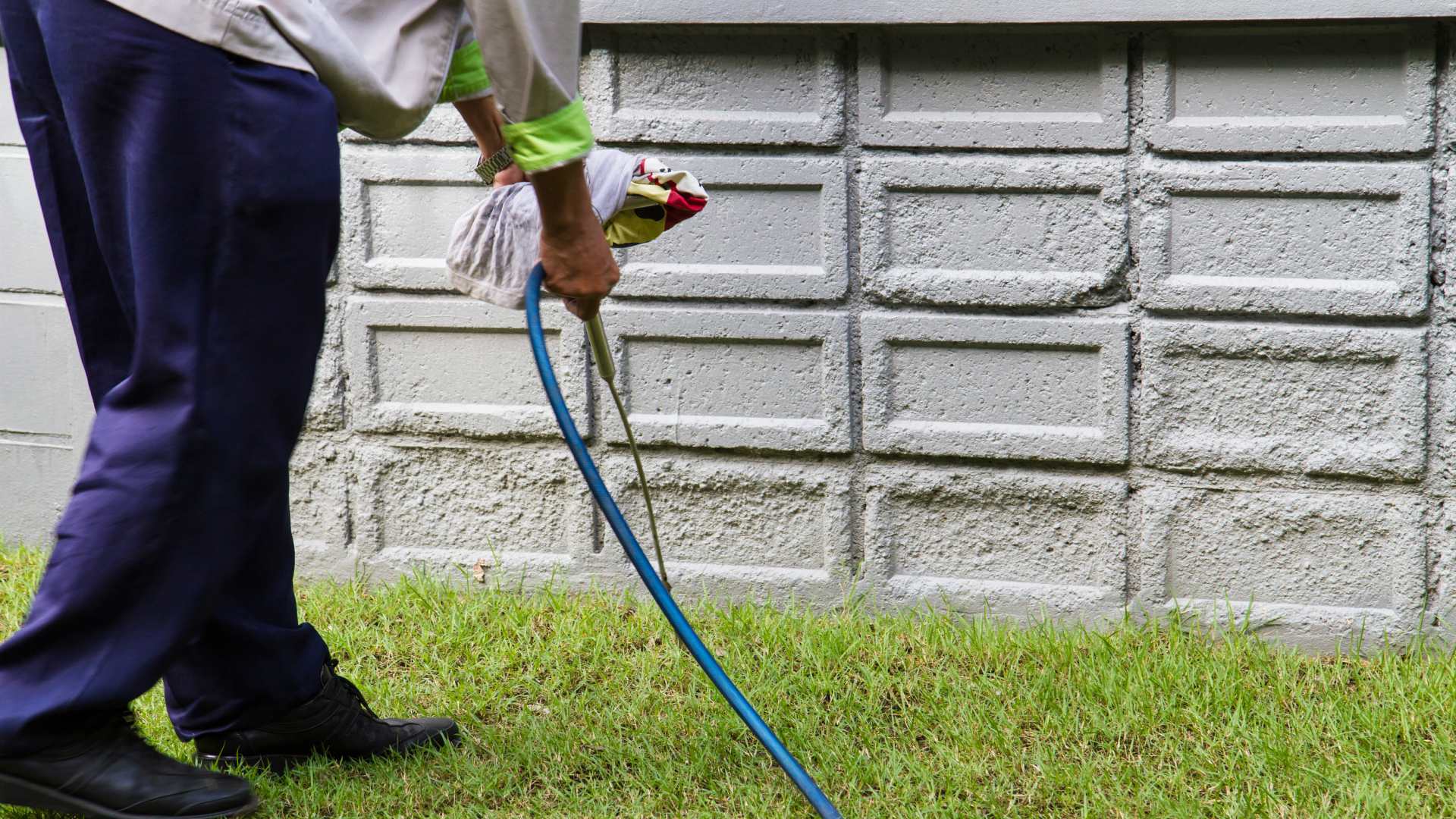
Short Answer: For Oklahoma City Bermuda grass lawns, the most effective pre-emergent herbicides are prodiamine (sold as Barricade) and dithiopyr (sold as Dimension). Both create a barrier in the top layer of soil that prevents crabgrass, goosegrass, and other summer annual weeds from establishing. Timing matters more than the product itself. In the OKC metro, the ideal application window is late February through mid-March, before soil temperatures reach 55 degrees consistently at a 4-inch depth. Here is everything you need to know to make the right choice.
If you are standing in the lawn care aisle at your local home improvement store right now, looking at a wall of herbicide products and trying to figure out which one actually works for Oklahoma lawns, you are not alone. It is one of the most common questions we get, and it is also one of the areas where a small mistake in timing or product selection can cost you months of frustration.
We are going to walk through the products that perform best in our climate, when to apply them, and the details that make the difference between a weed-free lawn and one that looks like it was never treated at all.
Understanding How Pre-Emergents Work
Before we talk about specific products, it helps to understand what pre-emergent herbicides actually do, because there is a common misconception that trips people up.
Pre-emergents do not kill existing weeds. They create a chemical barrier in the top half-inch of soil that prevents weed seeds from successfully germinating and establishing roots. Think of it like an invisible shield just below the surface. If a crabgrass seed tries to push through that barrier, it dies before it ever becomes a visible plant.
This is why timing is everything. Once a weed seed has germinated and pushed through the soil surface, a pre-emergent will not help. You have missed the window, and now you are dealing with a post-emergent situation, which is harder, more expensive, and less reliable.
The Two Products That Work Best in Oklahoma City
After years of treating lawns across the OKC metro, we have found that two active ingredients consistently outperform everything else in our climate and soil conditions.
Prodiamine, which you will find sold under the brand name Barricade, is our go-to for most residential properties. It offers the longest residual control of any pre-emergent on the market, typically lasting 4 to 6 months from a single application. That is important in Oklahoma because our growing season is long, and crabgrass germination pressure can extend well into May.
Dithiopyr, sold as Dimension, is another excellent option and has one advantage that prodiamine does not: it can provide limited post-emergent control of crabgrass in its very early growth stages (before the plant has more than one tiller). So if you are a little late on your application, Dimension gives you a slightly wider margin of error.
Both products are available in granular and liquid formulations. Granular is easier for homeowners to apply with a broadcast spreader. Liquid requires a sprayer but provides more uniform coverage, which is what most professional applicators use.
What About the Products at the Big Box Store?
You will see a lot of “weed and feed” combination products on store shelves, and we want to be upfront about those. Many of them contain pendimethalin (sold as Pendulum or found in Scotts Halts) as the pre-emergent active ingredient. Pendimethalin works, but it has a shorter residual than prodiamine, which means it may not last through the entire crabgrass germination window in Oklahoma.
The bigger issue with combination products is timing. A “weed and feed” product applies fertilizer and pre-emergent at the same time. But in Oklahoma City, the ideal time for pre-emergent (late February to mid-March) is often too early for fertilizer (mid-April for Bermuda). You end up compromising on one or the other.
We generally recommend separating these applications so each one can be timed correctly. It takes a little more effort, but the results are noticeably better.
When to Apply in the OKC Metro
The standard guidance is to apply pre-emergent when soil temperatures reach 55 degrees at a 4-inch depth for several consecutive days. In the Oklahoma City area, this typically happens in late February to mid-March, though it can vary by a couple of weeks depending on the specific year.
If you want to track it yourself, you can check soil temperature data through the Oklahoma Mesonet, which has monitoring stations across the state and provides real-time soil temperature readings. It takes the guesswork out of timing.
For properties that had heavy crabgrass pressure the previous year, we often recommend a split application: half the rate in late February and the other half in mid-April. This extends the barrier coverage through the entire germination window without using excessive product.
Common Application Mistakes
Even with the right product and the right timing, there are a few mistakes that can reduce effectiveness.
Not watering it in is the most common one. Pre-emergent herbicides need to be watered into the soil within 24 to 48 hours of application. Without water, the product sits on the grass blades and breaks down from sunlight before it ever reaches the soil where it needs to work. A half-inch of irrigation or rain within two days of application is ideal.
Applying to bare soil that you plan to seed is another common mistake. Pre-emergents do not discriminate between weed seeds and grass seeds. If you are planning to overseed or establish new turf from seed, you cannot use a pre-emergent in that area. You will need to wait until the new grass has been mowed at least two to three times before applying.
Uneven application is the third issue we see frequently. Skipping spots or overlapping too much creates inconsistent coverage. Using a quality broadcast spreader with a consistent walking pace helps, and making two passes at half rate in perpendicular directions gives the most uniform coverage.
What to Do Next
If you would rather have a professional handle your pre-emergent application and take the guesswork out of the process entirely, we are happy to help. Our lawn care programs include properly timed pre-emergent treatments as part of a full-season approach, so your lawn stays protected from spring through fall.
Call us at (405) 735-1223 to learn more about our weed control programs or to schedule a free property evaluation. Whether you decide to do it yourself or bring us in, we want you to have the information you need to make the best decision for your lawn.