Lawn Care
What a Full Year of Lawn Care Costs in the Oklahoma City Area
Elite Lawn Care • September 2026 • Oklahoma City • 8 min read
Short Answer: The price of a year of professional lawn care in the OKC metro is driven by four things: the square footage of your turf, how many applications your program includes, whether pest or disease control is bundled in, and the condition the lawn starts in. Square footage is the single biggest factor, which is why no honest company can quote you over the phone without measuring. A recovery year on a neglected lawn costs more than a maintenance year on a healthy one, and that gap closes as the lawn improves. The most useful question is not what it costs, but what is included.
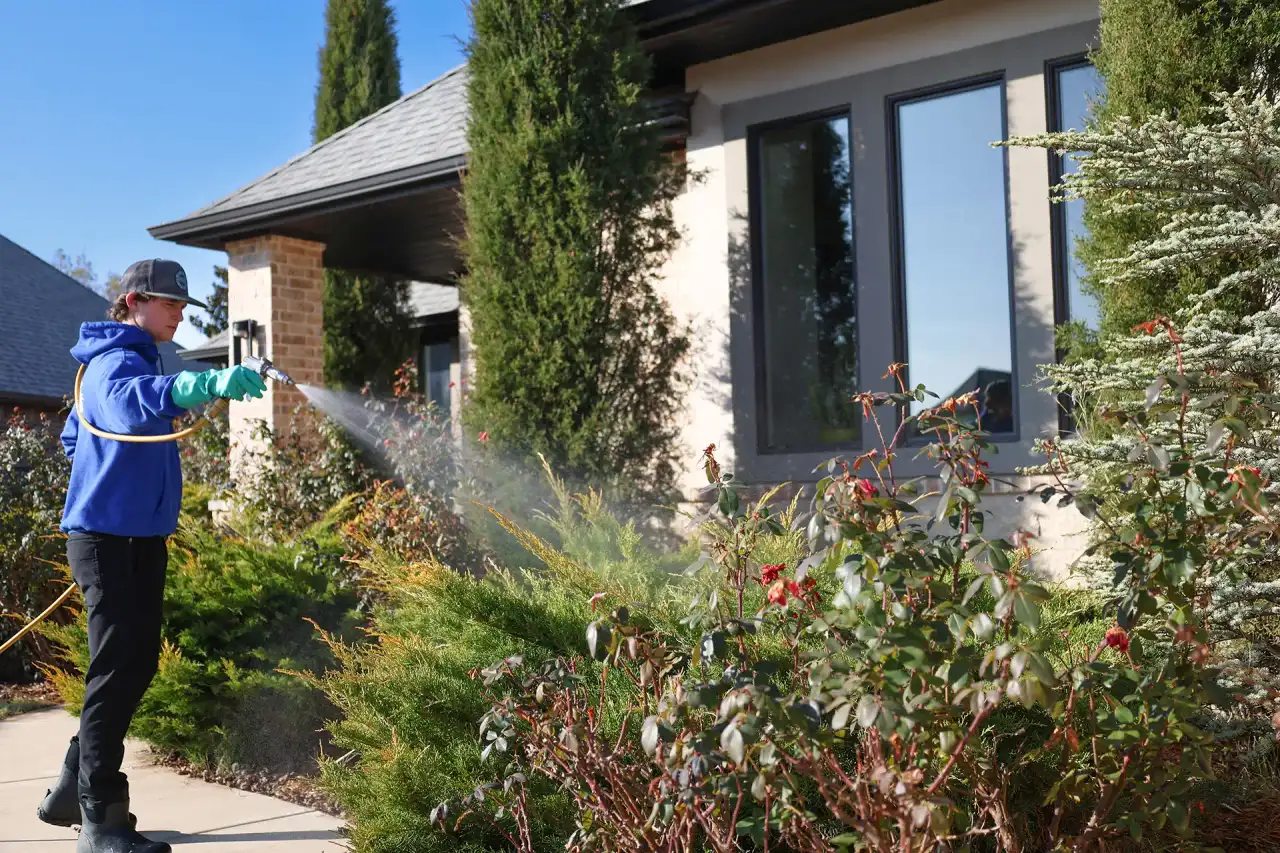
If you are reading this, you are probably comparing a couple of quotes and trying to work out why they are not the same number. That is a fair thing to be confused about. Lawn care pricing is genuinely hard to compare across companies, not because anyone is hiding the ball, but because two companies can use the same words and mean very different amounts of work.
We would rather you understand the math than simply trust us on it. So here is how the number gets built, what makes it move, and what to ask anyone you are considering, including us.
Square Footage Is the Foundation of the Number
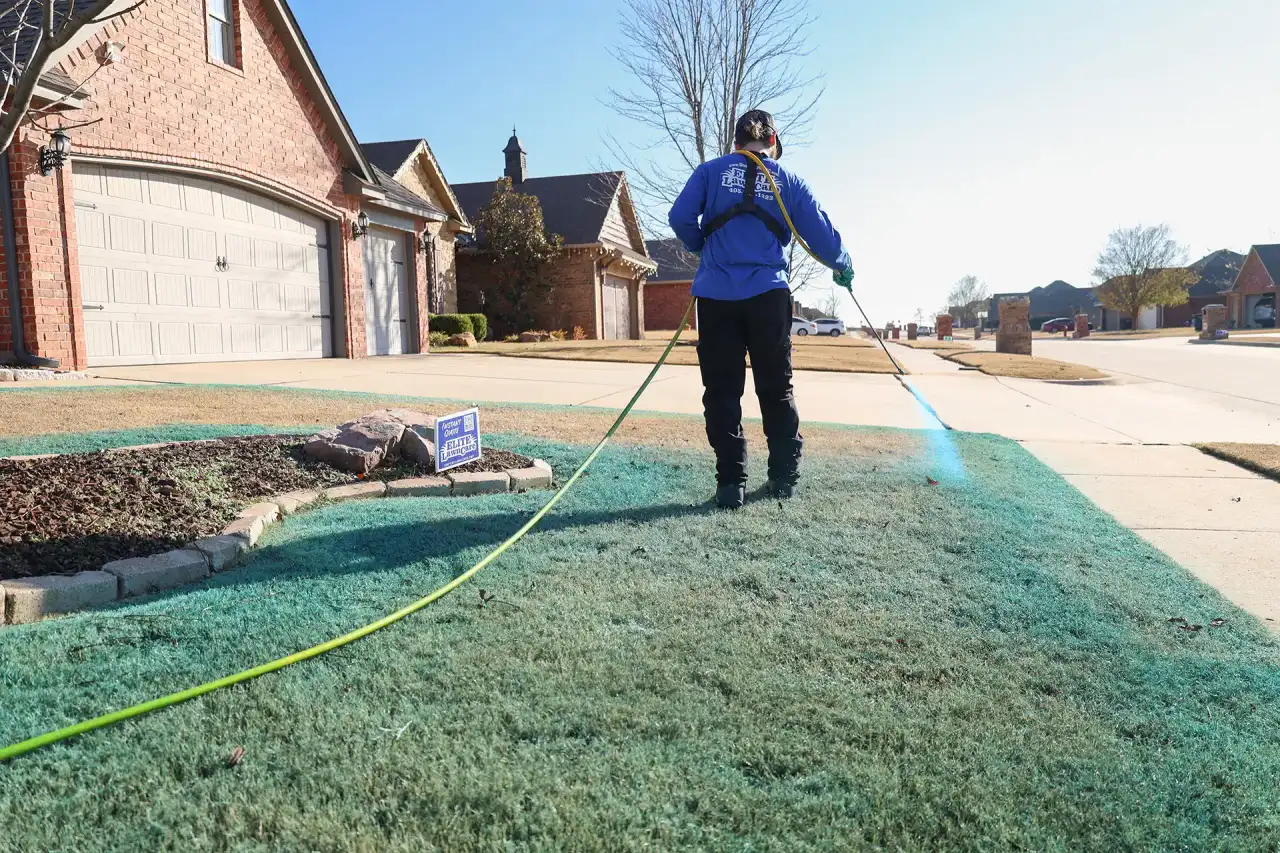
Almost everything in lawn care is priced by area, because almost every cost in lawn care scales with area. Product is measured in pounds or ounces per thousand square feet. Time on site scales with area. Equipment wear scales with area. When we quote a property, the first thing we do is measure the actual turf, not the lot.
That distinction matters more than people expect. A quarter acre lot in Edmond might have half its area under house, driveway, patio, beds, and trees. The lot size on the county record and the turf we actually treat can differ by a factor of two. This is exactly why a phone quote based on "about a quarter acre" tends to be wrong in one direction or the other, and why we would rather measure than guess.
It is also the honest answer to why the neighbor's price is different from yours. Two houses that look similar from the street routinely have very different amounts of grass.
How Many Applications, and Why the Count Varies
The second driver is how many times we come out. A typical full year program in our climate runs somewhere in the range of six to eight visits, spaced across the growing season and into fall, because that is what the agronomy actually calls for here. Oklahoma gives us a long warm season, a real winter weed season, and summer stress that arrives fast.
Fewer visits is not automatically a better deal. A four application program costs less per year than a seven application program, and it also leaves gaps where pre-emergent barriers have broken down and nothing new has gone down. We have taken over plenty of lawns where the previous program was cheap and the lawn was losing ground every year, which meant the customer was paying for maintenance and receiving slow decline.
When you compare quotes, count the visits and look at what happens in each one. Two programs at similar annual prices can differ by three applications.
What Is Bundled In
Fertilization and weed control are the core. Beyond that, programs diverge, and this is where quotes stop being comparable at all.
Grub control is a separate input with a real cost, and in our area it is genuinely worth carrying on most properties. Disease control for fungal pressure is another. Aeration is usually priced separately because it is a distinct piece of work with its own equipment. Perimeter pest control, mosquito service, and tree and shrub care are their own programs that some companies fold into a single quoted number and others itemize.
Neither approach is wrong, but a bundled number will always look higher than an unbundled one for the same actual scope. Ask for the line items. Any company that will not itemize is asking you to compare on faith.
The Condition Your Lawn Starts In
This is the factor most homeowners do not anticipate, and it is the one we spend the most time explaining on first visits.
A lawn that has been maintained consistently needs maintenance. A lawn that has been neglected for several years, or that has heavy weed pressure, compacted soil, thin coverage, and no recent fertility, needs recovery work first. Recovery costs more in year one. There is more weed pressure to knock down, often more applications, sometimes soil work, sometimes seeding.
The good news, and we want to be clear about this because it is the part that makes the spend worth it, is that the recovery premium is temporary. Most properties we work with move from recovery pricing to maintenance pricing over roughly two seasons, because the weed seed bank in the soil is being depleted and the turf is thick enough to crowd out what does germinate. Thick grass is the cheapest weed control there is. Everything we do in year one is aimed at getting you there.
What Those Factors Add Up To
With all of that said, you came here for numbers, so here are the ranges we typically see across the Oklahoma City metro. These are market ranges rather than a quote, because your property has a square footage and a condition that we have not measured yet.
On a typical residential lawn in the metro, call it five thousand to eight thousand square feet of actual turf, a single fertilization and weed control application generally runs somewhere in the $60 to $100 range. A full annual program of six to eight applications on that same lawn usually lands between $400 and $800 for the year. Move up to a larger property with a quarter acre or more of real turf and that annual figure commonly runs $700 to $1,400.
The common add ons price separately. Core aeration on a typical metro lot generally runs $150 to $300. Preventive grub control usually adds $60 to $120 for the season. Disease control varies widely because it depends on how much pressure your specific turf sees, and perimeter pest and mosquito programs are priced as their own services.
A recovery year on a badly neglected lawn can run 20 to 40 percent above the maintenance figure for that same property, which is the premium we talked about above. It is real, it is temporary, and we would rather quote it honestly than surprise you with it in month three.
How This Compares to Doing It Yourself
We get asked this constantly, and we think the honest answer is more nuanced than either side usually admits.
If you price only the bag of fertilizer against our invoice, do it yourself wins. That comparison leaves out most of the actual cost. A serious do it yourself program means a broadcast spreader and a sprayer, correct calibration of both, the right products bought in quantities that make sense, safe storage, and the time to apply everything in the right window rather than the weekend you happen to be free. It also means absorbing the cost of mistakes, and the common mistakes here are expensive. Fertilizer burn on Bermuda in July, pre-emergent laid over a fresh seeding, and a herbicide that drifts into a neighbor's ornamentals are all things we get called to fix.
Where do it yourself genuinely makes sense is a small, healthy, low pressure lawn owned by someone who enjoys the work and will keep to the timing. Where it tends to break down is larger properties, lawns that are already struggling, and schedules that do not bend for soil temperature. The most common thing we hear from new customers is not that they could not do it. It is that they could not do it on time, consistently, for three years running.
Questions Worth Asking Any Company
Ask how many applications the annual price covers and what goes down in each one. Ask whether grub and disease control are included or added. Ask whether the price is based on measured turf area and whether they will show you the measurement. Ask what happens if a treatment does not take, and whether return visits between scheduled applications cost extra. Ask whether the first year price is a recovery price and what maintenance looks like after that.
If the answers are specific, you are talking to someone who has thought about your property. If the answers are vague, the quote is a guess, and guesses tend to get corrected upward after the contract is signed.
What to Do Next
The most useful thing you can do is get your turf measured and get an itemized program in writing, from us or from anyone else you are considering. A number without a scope attached to it cannot be compared to anything.
If you would rather have someone else handle the timing decisions, the product selection, and the application for your Oklahoma City lawn, that is what we are here for. Elite Lawn Care is veteran owned, and we serve the OKC metro including Edmond, Norman, and Moore, along with Siloam Springs and Northwest Arkansas. Call us at 405-735-1223 or visit weedcontrolokc.com and we will measure your property, walk it with you, and put a program in front of you with the line items visible.
Here is what to expect from that conversation. We will tell you honestly whether your lawn needs a recovery year or a maintenance year, and we will tell you if we think you are being quoted for work you do not need. We would rather start with a smaller accurate program that we can grow into than sell you a large one that does not fit the yard you actually have.