Lawn Care
Why We Treat Your Lawn Differently in Fall Than We Do in Spring
Elite Lawn Care • September 2026 • Oklahoma City • 7 min read
Short Answer: Spring treatments push the part of the lawn you can see. Fall treatments build the part you cannot. In spring we are feeding top growth and blocking summer annual weeds like crabgrass. In fall we are feeding roots, helping the plant store carbohydrates for winter, and blocking a completely different set of winter annual weeds. Same lawn, opposite targets, different products. It is also why fall work pays off on a delay: what we do in October is largely invisible until the following April, when your lawn greens up earlier and thicker than the neighbors who only bought spring service.
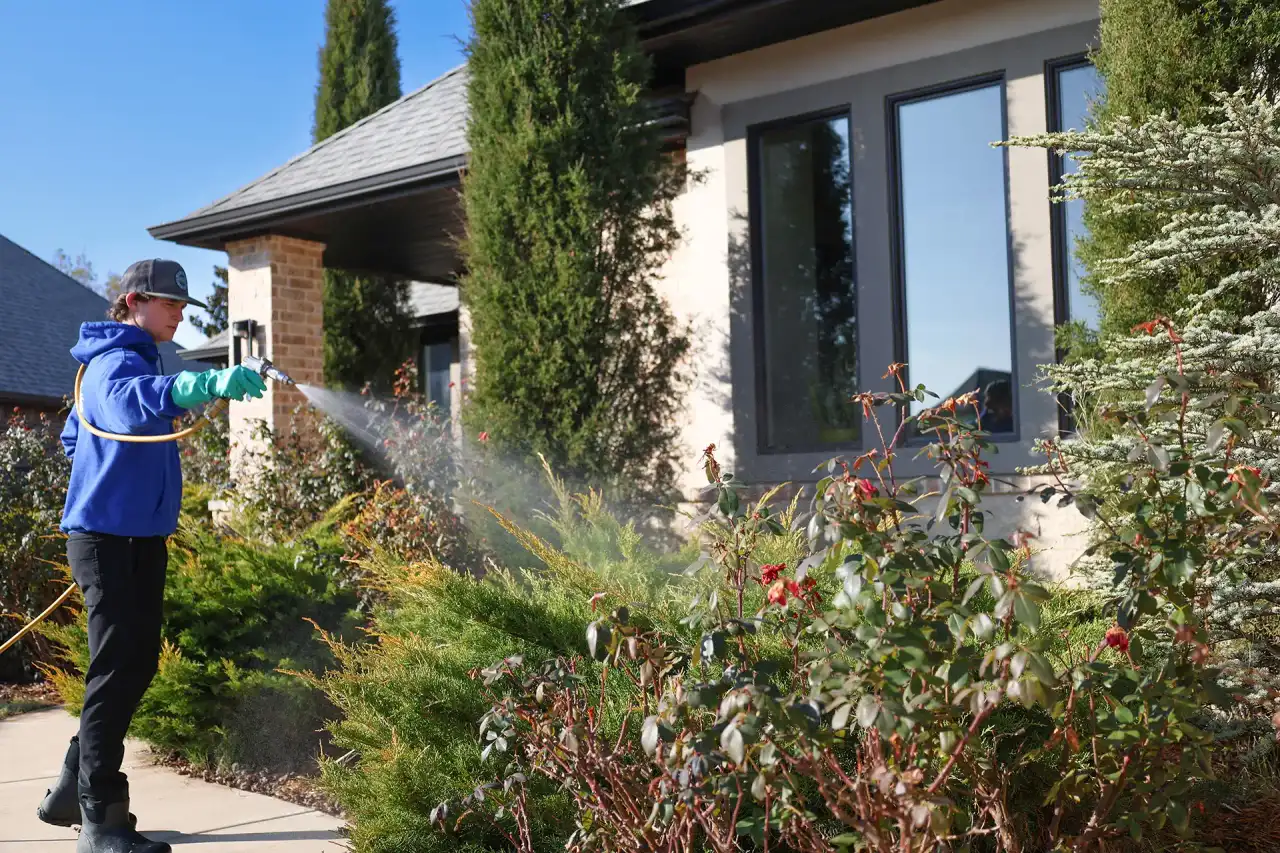
Most homeowners we talk to think of lawn care as a spring activity that tapers off. It is an understandable read. Spring is when the lawn visibly responds, when everything greens up, and when the results of a treatment show up within two weeks. Fall work is quieter, and quiet work is easy to skip.
When we sit down with a new customer in September, this is usually the conversation that changes how they think about their yard. So here is what actually differs between the two ends of the season, and why we do not simply run the spring playbook again in October.
Spring Is About the Blade. Fall Is About the Root.
A grass plant has a budget. Energy it captures through its leaves gets spent on either top growth or root growth and storage, and the balance shifts with the season.
In spring, warming soil and lengthening days push the plant hard into top growth. That is what you want then, because you want coverage and density heading into summer. Feeding heavily in spring supports that, and the lawn shows it fast.
In fall the plant flips. Top growth slows as temperatures drop, but roots keep growing well after the blades have mostly stopped, and the plant starts converting energy into stored carbohydrates rather than new leaves. That storage is what gets it through dormancy and what fuels next spring's green up. Feeding into that window puts nutrition exactly where the plant is already trying to send it. Feeding a fall lawn like it is a spring lawn wastes the application and, on warm season turf, can actively hurt by pushing tender growth into the first freeze.
Imagine the difference between paying someone's rent this month and putting money in their savings account. Both are help. Only one of them is still there in March.
The Fertility Math Changes
Because the target changed, the product changes. Spring applications lean on nitrogen, which drives leaf growth and color. Fall applications shift the emphasis toward potassium, which is the nutrient most associated with root development, cell wall strength, drought tolerance, and cold hardiness.
That is not a marketing distinction. A lawn going into an Oklahoma winter with good potassium levels handles freeze and thaw cycles measurably better than one that got a heavy nitrogen feeding in October and nothing else. We also moderate rates in late fall, because the goal is steady support rather than a growth surge.
If you have ever wondered why the bag you bought in April is not the right thing to put down in October, this is why. Same lawn, different job.
Different Weeds, Opposite Calendar
The weed strategy inverts completely, and this trips up more homeowners than anything else.
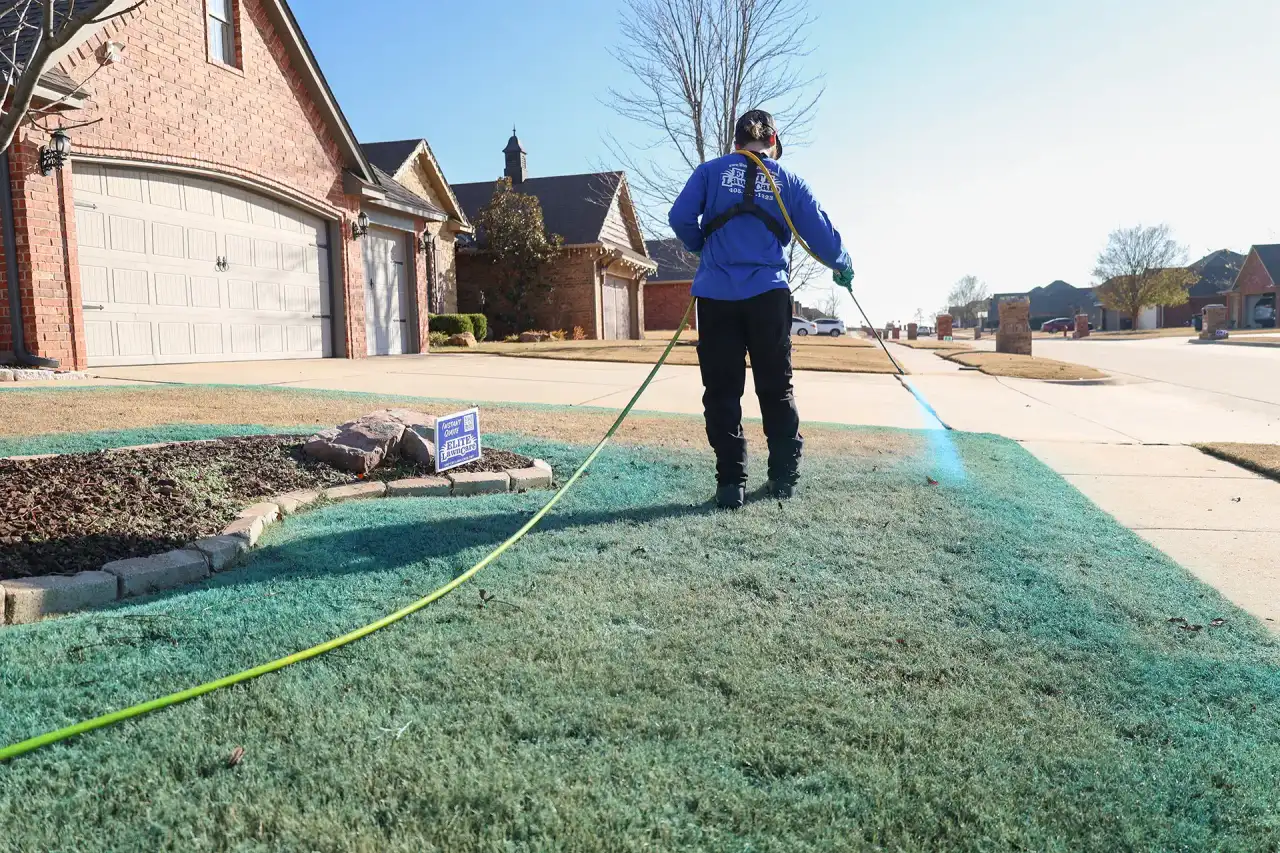
Spring pre-emergent targets summer annuals, and crabgrass is the headline. Those seeds germinate as soil warms through the mid 50s and up, so the barrier has to be down in late winter and early spring, before you see anything.
Fall pre-emergent targets winter annuals: henbit, chickweed, poa annua, deadnettle, bittercress. Those germinate as soil cools back through the low 70s, which puts the barrier in late September into October. Spring products applied in fall do not address the fall weed set, and the timing signal runs in the opposite direction, downward through a temperature threshold rather than upward through one.
Two applications, six months apart, aimed at two different groups of plants. Skip either one and you get a predictable set of weeds at a predictable time of year.
Warm Season and Cool Season Lawns Diverge Here
Oklahoma sits in the transition zone, which means we treat both kinds of turf, sometimes on the same street, and fall is where their needs split hardest.
Bermuda and zoysia are warm season grasses heading into true dormancy. For them, fall is about hardening off and storing energy, not about pushing growth. We are careful not to stimulate late tender growth that a hard freeze will damage.
Tall fescue is a cool season grass, and fall is its best season of the entire year. Cooling temperatures and autumn moisture make September and October the ideal window for seeding, overseeding, and heavy root development. A fescue lawn that gets its fall work done right will outperform the same lawn given twice the attention in spring.
So when we ask what turf type you have before we schedule, it is not a formality. On a Bermuda lawn and a fescue lawn a hundred feet apart, our October visit does close to opposite things.
Why Fall Aeration Beats Spring Aeration Here
Core aeration relieves compaction and opens the soil so water, air, and nutrients reach the root zone. It helps in either season, but fall is generally the better bet in our area for two reasons.
First, aerating opens holes in the soil surface, and holes are germination sites. In spring that means you have handed crabgrass an invitation and disrupted your pre-emergent barrier at the same time. In fall, if you are seeding fescue, those same holes are exactly what you want.
Second, the recovery period is friendlier. A lawn aerated in fall knits back together during mild weather with months before summer stress arrives. A lawn aerated in late spring is repairing itself as the heat builds.
The cores themselves matter more than most people realize. We leave them on the surface rather than raking them up, and within a couple of weeks rain and mowing break them down and work that soil back into the thatch layer. Pulling the plugs off the lawn because they look untidy for ten days throws away a meaningful part of the benefit. If the appearance bothers you, running a mower over the lawn once the plugs have dried will scatter them quickly.
How often is a fair question. On most metro lawns, once a year in fall is plenty. On heavy clay, on new construction where the topsoil was scraped and compacted, or on a yard that takes real foot traffic from kids and dogs, it earns its keep every year without question.
The Payoff Arrives on a Delay
This is the honest catch with fall work, and we would rather say it out loud than have you wonder whether the money did anything.
You will not see much in October. The lawn is slowing down. It is supposed to. What fall work buys you shows up as an earlier and more even spring green up, better density in April and May, and meaningfully more drought tolerance the following July because the root system is deeper than it would otherwise have been. Across the properties we service, the difference between a lawn on a full year program and one on spring only service is most visible in the first three weeks of spring, and again in the worst two weeks of summer.
Most properties we work with take about two full seasons for that compounding to become obvious. It is the least glamorous part of what we do and probably the highest return.
What to Do Next
If you are on a spring only program, the useful question to ask your provider is what happens to your lawn between September and December. If the answer is nothing, you are buying half a year of agronomy and paying for the visible half.
If you would rather have someone handle the timing, the turf type judgment, and the product selection across the whole year rather than just the pretty part of it, that is what we do. Elite Lawn Care is veteran owned, and we serve the Oklahoma City metro including Edmond, Norman, and Moore, along with Siloam Springs and Northwest Arkansas. Call 405-735-1223 or visit weedcontrolokc.com.
Here is what to expect. We will identify your turf type, tell you which of the two fall playbooks your lawn needs, and be straight with you about the fact that you are buying something you mostly will not see until spring. That is a harder sell in October than in April, and it is still the right time to buy it.