
Late-Summer and Fall Fertilization for OKC and NWA Bermuda: Timing the Last Big Feeding Before Dormancy
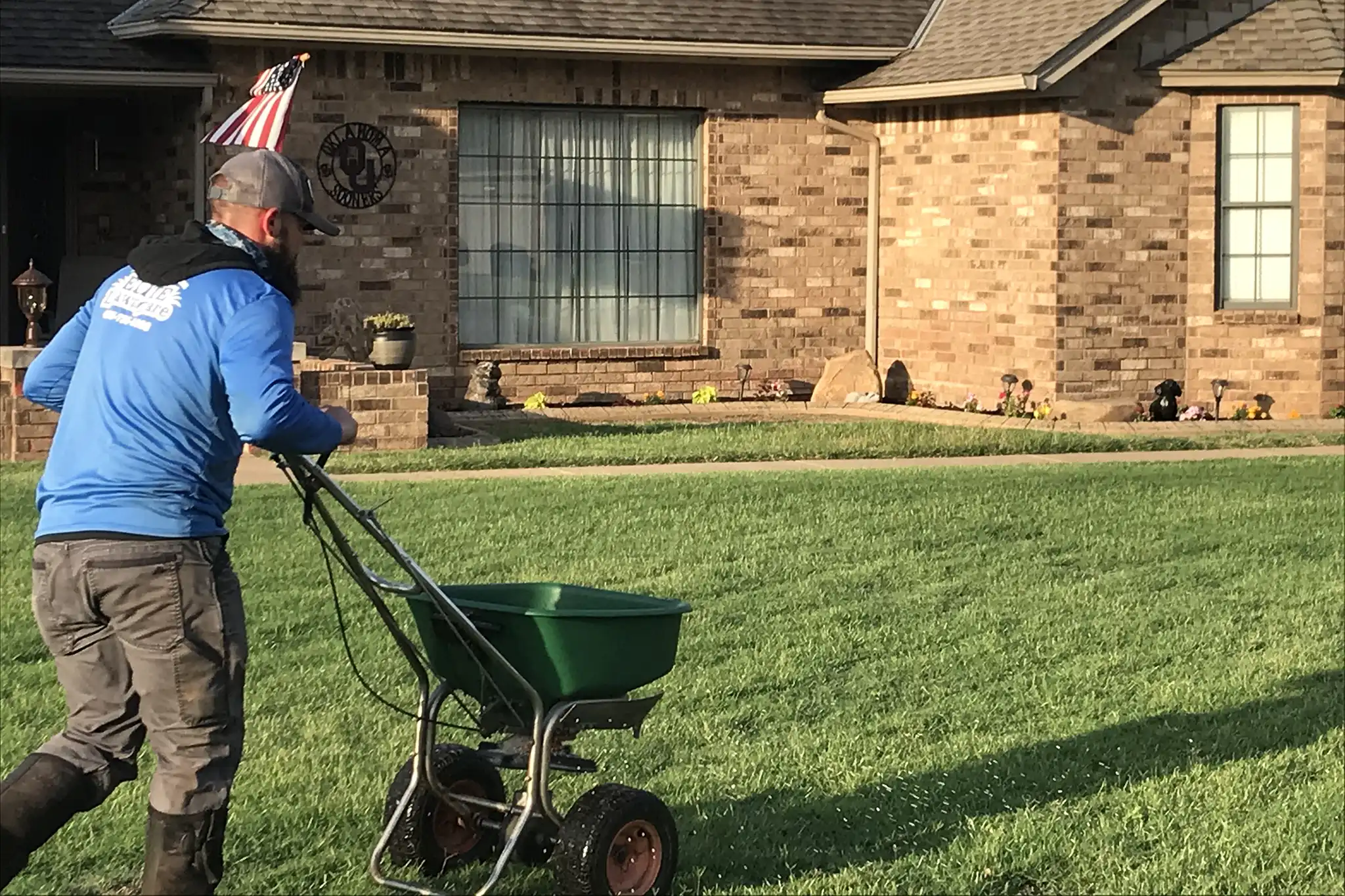
Short Answer: For Bermuda lawns across the OKC metro and Northwest Arkansas, the late-summer feeding, applied as the worst heat starts to break, is one of the most valuable of the entire year. It helps the lawn recover from summer, rebuild density, and store the root reserves that decide how strong it greens up next spring. The right late-season feeding favors potassium over a heavy nitrogen load, because potassium builds cold hardiness and disease resistance heading into dormancy. The one rule that matters most is timing: feed while the grass is still actively growing, not after it starts shutting down. Here is the veteran-owned read on the last big feeding of the year.
Through the worst of an Oklahoma or Arkansas summer, our advice on Bermuda is restraint: hold the heavy nitrogen, because pushing growth in 95-degree heat does more harm than good. We say that a lot, and we mean it. But as the brutal stretch starts to ease in late summer, the math flips, and this becomes the window for one of the most important feedings of the year. A lot of homeowners miss it.
We are a veteran-owned operation, and we have a bias toward doing the one thing that actually moves the needle rather than a pile of things that look busy. The late-summer feeding is one of those high-leverage moves. Done right, it sets up next year’s lawn. Done wrong, or skipped, it quietly costs you a strong spring. Here is the straight version of how to think about it.
What Bermuda Is Doing as Summer Breaks
Bermuda is a warm-season grass, so it peaks in heat and then winds down as the days shorten and nights cool, eventually going dormant and brown for winter. The weeks as the worst heat eases are a pivotal stretch: the lawn shifts from pure survival back toward active growth, then begins moving resources down into its roots and crowns to store energy for the dormant season ahead.
Feeding the lawn during that window supports exactly that process. A Bermuda lawn that gets a well-timed late-summer feeding recovers density after the beating of summer and enters dormancy well stocked. A lawn that goes unfed limps into winter depleted. You do not see the difference in October. You see it the following spring, in how fast and how evenly the lawn wakes up.
Why This Feeding Earns Its Keep
Recovery From a Hard Summer
After a season of OKC and NWA heat, drought stress, and traffic, most Bermuda lawns need to rebuild before they slow for the year. A feeding as the heat breaks fuels that recovery while the grass still has enough active growth to use it, helping thin and worn areas fill back in from runners. This is the lawn’s last real growth push of the season, and it is worth supporting.
Root Reserves and Cold Hardiness
The bigger payoff is underground, and this is where the nutrient balance matters. A late-season feeding should lean toward potassium rather than a heavy nitrogen load. Potassium strengthens the plant’s cell walls, improves its tolerance to cold, and bolsters disease resistance heading into the vulnerable dormant period. A Bermuda lawn that goes into an Oklahoma or Arkansas winter with good potassium and solid reserves simply survives the cold in better shape.
A Stronger Spring
Here is the part most homeowners do not connect: a lot of what makes a Bermuda lawn green up early and evenly in spring is decided the previous late summer and fall. A lawn that banked reserves wakes up vigorously when the soil warms. A depleted one greens up slow and patchy, and the owner spends spring chasing color with fertilizer when the real opportunity was months earlier. We see this pattern every year.
The Timing Rule That Matters Most
Timing is what makes or breaks this feeding, and getting it wrong can do real harm, not just waste money. The feeding needs to land while the grass is still actively growing enough to take up and use the nutrients, as the worst heat breaks in late summer, but before the lawn slows down and heads toward dormancy. In our area that points to late summer and early fall rather than the deep heat of midsummer or the cooling weeks right before dormancy sets in.
Put down a heavy nitrogen feeding too late, when the lawn is preparing to shut down, and you can force tender new growth at exactly the wrong moment, growth that is then vulnerable to the first hard cold snap and that pulls energy the plant needed for winter. That is why a late-season feeding favors potassium and why the window closes as dormancy approaches. Feed on time, with the right balance, and it helps. Feed late and heavy, and it hurts. The line between the two is timing.
How This Fits the Whole Fall Plan
The late-summer feeding works best as part of a coordinated fall approach, not a one-off application. As the heat breaks, the same window is ideal for core aeration, which relieves a season of compaction and helps the feeding actually reach the root zone instead of sitting on hard, baked Oklahoma clay. Aerate and then feed, and you get far more out of both than feeding alone.
For homeowners considering fall projects, fescue overseeding in shaded areas of a transition-zone lawn, or other renovation work, the fertilization plan has to be coordinated with those decisions, because new seed and established Bermuda have different needs. Thinking about the feeding, aeration, and any seeding together, rather than as separate errands, is exactly the kind of sequencing we work through on a property walk. The order and timing matter as much as the products.
Frequently Asked Questions
Did you not say to hold off fertilizing Bermuda in the heat?
We did, and we stand by it. During peak summer heat, a heavy nitrogen push hurts more than it helps. The late-summer feeding is different: it is timed for when the worst heat breaks and the grass is recovering and preparing for dormancy, and it favors potassium over heavy nitrogen. Timing and balance are what change it from a mistake into one of the best moves of the year.
What is the difference between this and a winterizer?
They overlap a lot. The idea is a late-season feeding that emphasizes potassium to build cold hardiness rather than a heavy nitrogen push for top growth. For warm-season Bermuda, the key is getting it down while the grass is still active, before it goes dormant, not after it has browned out.
Can I fertilize too late in the fall?
Yes, and it can backfire. A heavy feeding too close to dormancy can force tender growth that is vulnerable to cold and can weaken the lawn for winter. The window is as the heat breaks and while the grass is still actively growing, then it closes. When in doubt, earlier in that window is safer than later.
My Bermuda is already browning out. Should I still feed it?
Once Bermuda is browning and heading into dormancy, the feeding window has largely passed for the year. The value comes from feeding earlier, as the heat breaks and the lawn is still active. If you have missed it, the honest answer is to note it for next year rather than force a late application that will not help and could hurt.
The Bottom Line
The OKC and NWA Bermuda lawns that look best in spring are usually the ones that were fed correctly the previous late summer and fall. A well-timed, potassium-forward feeding as the heat breaks helps the grass recover, bank reserves, and harden off for winter, so it comes out of dormancy ahead instead of behind. Treat it as an investment in next year, get the timing right, and it pays off long after the application is done. That is the kind of move we will always tell you to make, because it works.
What to Do Next
If you want the late-summer feeding timed and balanced correctly for your specific Bermuda lawn, and coordinated with aeration or any fall work, we are glad to come walk the property and give you a straight recommendation.
As a veteran-owned company we approach every property the way we expect work to be approached when we are the customer: straight assessment, clear recommendation, honest pricing. No upselling, no fear-based pitches.
Call us at 405-735-1223 or visit weedcontrolokc.com to schedule. We serve Oklahoma City, Edmond, Norman, Moore, Siloam Springs, Bentonville, Rogers, and surrounding communities across the OKC metro and Northwest Arkansas.