
Mosquito and Tick Programs in Oklahoma City: What’s Worth Paying For and What Isn’t
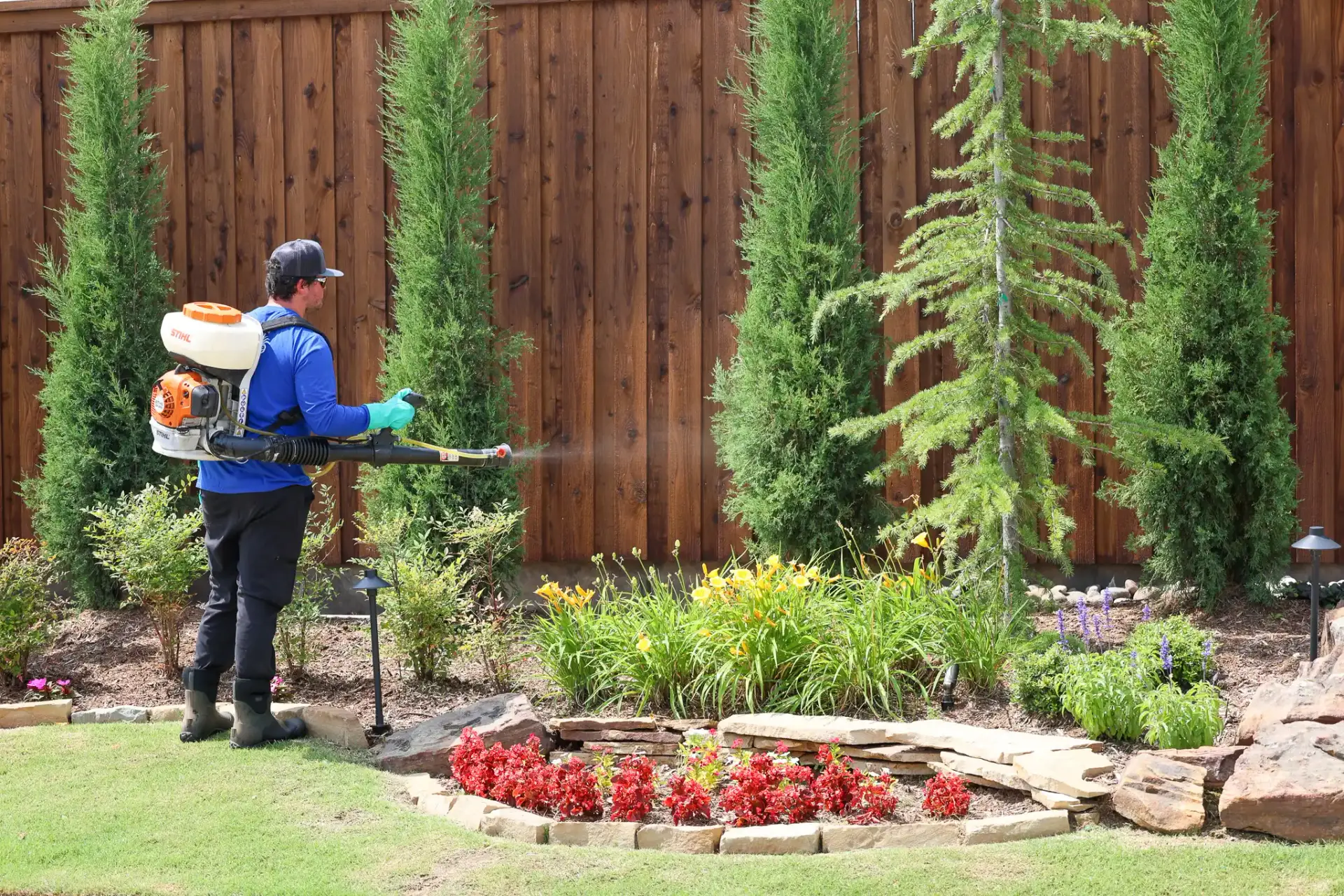
Short Answer: For most OKC metro properties, a professional barrier spray program every 21 to 28 days from May through October delivers 80 to 90 percent mosquito and tick reduction for $80 to $130 per visit. That is the option worth paying for. Single-shot treatments, DIY foggers, citronella candles, and bug zappers are mostly not. Installed misting systems work but cost 2 to 3 times more than barrier sprays over five years and only make sense for specific situations. Here is what each option actually delivers and how to decide what fits your property.
If you are tired of being driven inside at dusk and trying to figure out which mosquito and tick service is worth the money, this is the post for you. We see a lot of OKC area homeowners spending money on programs that do not work, or skipping programs that would dramatically improve their backyard experience for less than they spend on lawn care. Veteran-owned companies like ours value straightforward conversations about what works and what does not, so we want to walk through it honestly.
What Actually Works: Professional Barrier Sprays
A professional barrier spray is a targeted application of residual insecticide to the harborage zones where adult mosquitoes and ticks rest during the day. The underside of leaves on shrubs. The lower three feet of tree canopy. Tall grass along property lines. Shaded humid areas around foundations, decks, and fences.
A properly applied treatment kills resting pests within hours and continues killing incoming pests for the next 21 to 28 days. We typically run barrier programs from May through early October for OKC properties, with treatments every 3 to 4 weeks. The result is 80 to 90 percent reduction in mosquito activity in the treated portions of your yard, plus meaningful tick suppression.
Pricing for a typical residential lot in OKC, Edmond, Norman, or Moore runs $80 to $130 per visit, with discounts often available for prepaid seasonal packages. Total annual cost typically lands between $640 and $1,040, which works out to about $5 to $9 per day during peak mosquito season.
What Is Worth the Slight Premium: Naturally-Based Programs
Some homeowners prefer naturally-based active ingredients (essential oils, botanically-derived compounds) over conventional synthetic pyrethroids. The honest comparison: naturally-based products break down faster, are gentler on pollinators and beneficial insects, and require slightly more frequent application. Cost is typically 15 to 25 percent higher per visit.
For families with pollinator concerns, kids and pets with chemical sensitivities, or homeowners who want the lower-impact option, the slight premium is worth paying. For families without those specific concerns, conventional barrier sprays work just as well.
What Sometimes Makes Sense: Event Treatments
If you are hosting a graduation party, wedding, or holiday gathering and you do not have an ongoing program, a single event treatment applied 3 to 5 days before the event can give you peak protection during the gathering window. Cost is typically $120 to $200 for one application.
This is one of the few use cases where a single-shot treatment is legitimate. For ongoing comfort, single treatments do not work because the population rebounds before the next intervention.
What Probably Does Not Make Sense for Most Properties
Installed mosquito misting systems. Effective but expensive. Installation runs $2,500 to $5,000. Annual operating cost is another $600 to $1,200. Over five years, total cost is 2 to 3 times what professional barrier sprays cost for similar results on most quarter to half acre lots. The systems make sense for large properties (1+ acre), wooded edges with severe pressure, frequent outdoor entertainers, or homeowners with bite sensitivity issues. For typical suburban OKC metro lots, the math usually does not work.
What Does Not Work Well
Bug zappers. Effective at killing non-target insects (including beneficial ones) but largely ineffective for mosquitoes specifically. Most mosquitoes are not attracted to the UV light that zappers use.
Hose-end fogger products from the home improvement store. Inconsistent application, often heavier per dollar on pollinators than a professional service, and the homeowner has no protective equipment. We do not recommend these.
Citronella candles and tiki torches. Work in a 6 to 8 foot radius in still air. Fine as a small patio assist. Not a yard-wide solution and will not handle ticks at all.
Lawn aerator or sprinkler-style mosquito attractants. Mostly gimmicks. The mosquito population is determined by breeding water and harborage habitat, not by attracting and trapping individual insects.
What Is Always Worth Doing (And Costs Nothing)
Standing water elimination. Mosquitoes need standing water for any container size to lay eggs. A 20-minute walk of your property every couple of weeks dumping or refreshing standing water (plant saucers, bird baths, kiddie pools, tarps, clogged gutters, low spots) can reduce on-property mosquito production by 60 to 80 percent. Free, fast, and the single highest-leverage DIY mosquito control practice.
For tick reduction, keep the lawn cut to 3.5 inches at the woods edge, clear leaf litter within 10 feet of the lawn, and avoid walking through tall grass or brush. Ticks need shaded humid harborage. Reducing that habitat reduces the population that establishes on your property.
What to Expect From a Real Program
We want to set realistic expectations. A professional barrier program does not produce zero mosquitoes. It produces dramatic reduction. The goal is comfort, not absolute absence. You should expect to enjoy your patio at dusk, host outdoor gatherings without misery, and let kids and pets play in the yard without coming inside covered in bites. You should not expect to walk through tall grass at the woods edge bite-free, because mosquitoes range up to a mile and ticks live in those edge zones regardless of how well your yard is treated.
Tick Coverage Specifics
Tick reduction is included in most mosquito programs because the harborage zones overlap. We treat the lawn edges, woods boundary, leaf litter zones, and any path or transition areas. The treatments knock down active ticks within 48 hours and provide 3 to 4 weeks of residual protection.
For properties bordering woods, with frequent deer activity, or with tick-borne illness history, we may recommend tick tubes (cardboard tubes filled with permethrin-treated cotton that mice use as nest material, killing immature ticks in the nest) as a supplement. This adds $50 to $100 per visit but breaks the reproductive cycle on heavily-pressured properties.
What About Permanent Property Modifications?
Some property modifications meaningfully reduce mosquito and tick pressure without ongoing chemical treatment. Removing or relocating standing water sources permanently (proper drainage, gutter maintenance, fixing low spots). Trimming back dense shrubs that create shaded humid harborage near the house. Clearing leaf litter from the woods edge if your property borders trees. Installing a fenced and mowed buffer between woods and the family-use part of the yard. These are one-time investments that compound over years. We are happy to walk through which modifications would make the biggest difference on your specific lot during a property visit.
Frequently Asked Questions
How quickly can I be on the schedule?
Most properties we can have on the schedule within 5 to 7 days of the initial call. During peak season (June and July) it can stretch to 10 to 14 days.
Are these products safe around kids and pets?
Once dry (typically 1 to 2 hours after application), yes. Your technician will give you exact timing. For families with specific concerns, we can adjust products or schedule.
What if it rains right after treatment?
Most products have some rainfastness once dry. Heavy rain within 6 hours of application can reduce effectiveness, in which case we will retreat at no additional charge.
Do I need a contract?
No. We do offer prepaid seasonal packages with modest discounts, but month-to-month service is available. You can cancel anytime.
What a First-Year Customer Should Expect
If you are signing up for mosquito and tick service for the first time, here is roughly what the season looks like. First two weeks: noticeable reduction in mosquito activity, especially at dusk. Bites become rare in the family-use part of the yard. Weeks three to four: second treatment goes down. Population pressure stays low. Tick activity at the woods edge drops dramatically. Mid summer: hot dry stretches reduce mosquito pressure naturally. Wet stretches may require tighter intervals between treatments. End of season: final treatment in early October, walk-through of any standing water sources or harborage issues to address over winter. By the second season, customers consistently report needing fewer rescue applications and seeing fewer bites year over year.
What to Do Next
If you want a straight conversation about what your specific property needs, we are glad to come walk the yard and put together a realistic plan. As a veteran-owned company, we are not going to push products that do not match your situation.
Call us at 405-735-1223 or visit weedcontrolokc.com. We serve Oklahoma City, Edmond, Norman, Moore, Siloam Springs, Bentonville, Rogers, and surrounding communities across the OKC metro and Northwest Arkansas.