
Why Is My Lawn Worse This Year Than Last? 5 Common Causes in OKC and NWA
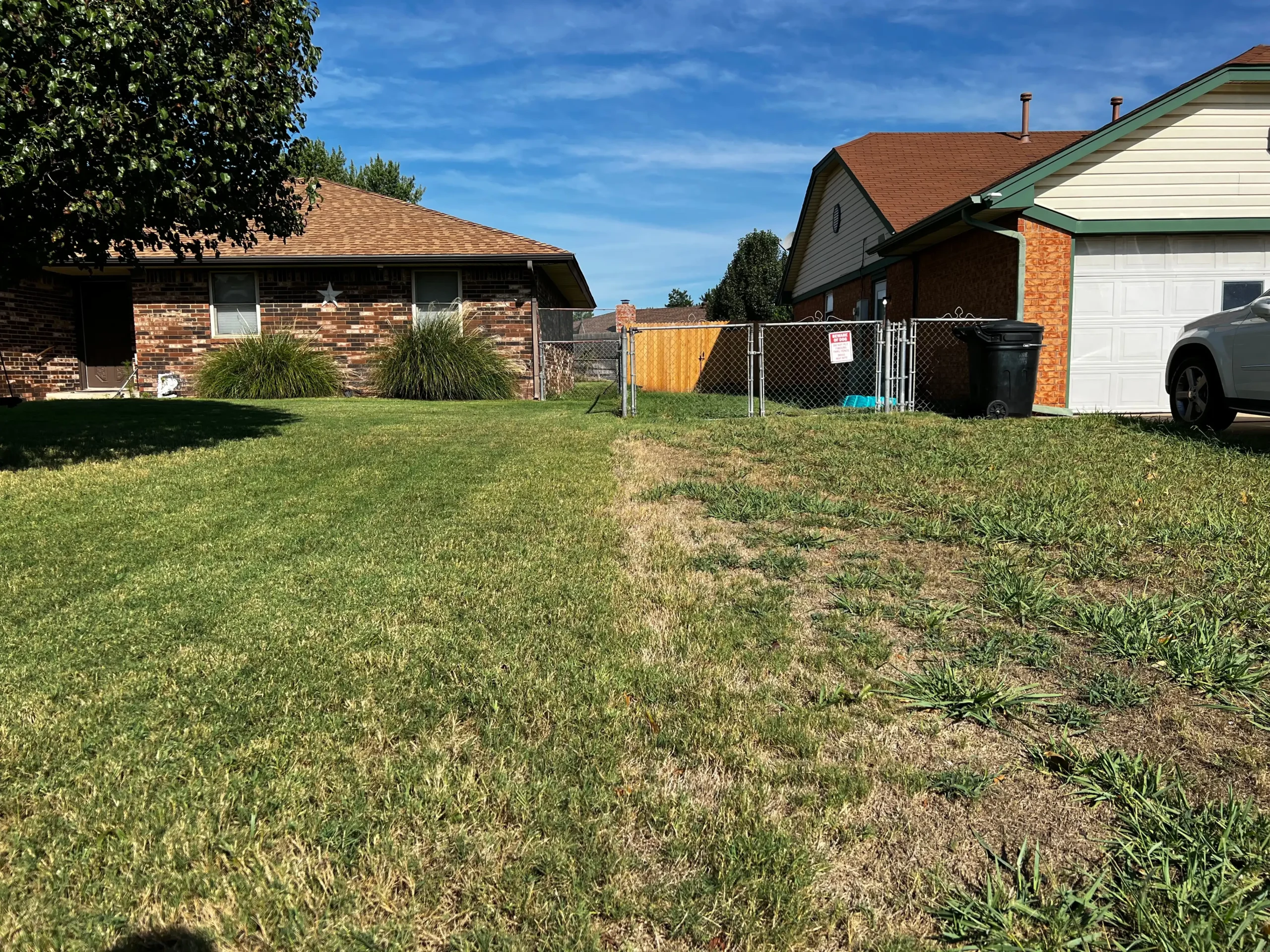
Short Answer: When a lawn is visibly worse this year than last, the cause is usually one of five things: declining soil chemistry that has reached a tipping point, a treatment program that is no longer matching what the lawn actually needs, a new disease or pest pressure that was not present before, weather extremes that compounded existing weakness, or maintenance practices (mowing, watering) that have drifted off course. Each shows up a little differently and the fix depends on what is actually driving the decline. Here is how to think about it for your specific property in Oklahoma City or Northwest Arkansas.
If your lawn looks worse this spring than it did last spring, you are not imagining it. Most homeowners can sense lawn decline before they can pinpoint it. The grass is thinner. The weeds are heavier. Spots that were green last year are bare or struggling now. The lawn that used to fill in fast after winter is taking longer to wake up.
The honest answer is that lawn decline is rarely random. Something specific changed, and identifying that something is the difference between a year of frustration and a productive recovery plan. As a veteran-owned company serving Oklahoma City, Norman, Edmond, Siloam Springs, and Northwest Arkansas, we walk a lot of declining lawns each spring. Here are the five causes that come up over and over.
Cause 1: Soil Chemistry Has Drifted Past a Tipping Point
Lawns sit on soil. Soil chemistry changes over time, slowly enough that most homeowners do not notice. Then one season the lawn falls apart, and the cause traces back to soil pH, nutrient deficiencies, or salt accumulation that crossed a threshold.
Most Oklahoma and Arkansas soils run alkaline. Years of fertilization without correction can shift pH further out of range, which locks up iron, manganese, and other nutrients even when applied. The lawn looks fine for a few years and then starts thinning as the locked-up nutrients catch up with the grass.
The diagnostic move is a soil test. We pull samples from a few representative spots and look at pH, organic matter, nitrogen, phosphorus, potassium, and minor nutrients. The numbers tell us whether amendments (lime, sulfur, gypsum, iron, etc.) need to come before the next round of fertilizer. Without this step, you can apply more product and see less result.
Cause 2: Your Treatment Program Has Outgrown Its Fit
Lawns change. The program that worked when you started may no longer match what the lawn needs now. We see this often with customers who started service when their lawn was thin and weedy, used a heavy weed-control program for two years to clean it up, and then kept that same program even after the lawn was clean.
Heavy weed-control products applied to clean lawns can stress the grass. The lawn declines because it is being treated for problems it no longer has. The fix is to step down to a maintenance-level program with lighter weed pressure and stronger fertility focus.
The opposite happens too. A program that was sufficient for a healthy lawn may not be enough for a lawn under new pressure (new disease activity, new pest pressure, increased traffic, etc.). The fix in that case is to step up.
Cause 3: New Disease or Pest Pressure
Fungal diseases and turf insects vary year to year. Some seasons are quiet. Others are intense. If conditions favored a particular disease last summer (extended humidity for brown patch, drought stress for gray leaf spot, etc.), the damage carries forward into this spring even after the visible disease has cleared.
Take-all root rot is a common culprit on Bermuda lawns in our area. It builds up over years and can suddenly produce visible damage in spring of year 3 or 4 even though the underlying disease has been present longer. Once visible, it requires a fungicide program plus soil chemistry corrections.
Grub populations also run in cycles. Heavy grub damage one fall can produce thin, recovering lawn the following spring even after the grubs are gone, because the roots that were destroyed take time to rebuild.
Cause 4: Weather Extremes Compounded Existing Weakness
Lawns can absorb one rough season. Two in a row often produces visible decline. A hot dry summer followed by a wet humid fall, or a brutal winter cold snap on top of a stressed lawn, can push the grass past where it can recover quickly.
Weather is something you cannot control, but you can recognize when it is the cause. If your lawn declined after specifically rough conditions in the prior 12 months, the recovery plan is patience plus more aggressive fertility and seeding to rebuild density. The grass is not failing; it is recovering from what hit it.
Cause 5: Maintenance Practices Have Drifted
Mowing height, mowing frequency, watering schedules, and other maintenance practices often shift slowly without anyone noticing. A new mower with a lower deck setting. A new lawn service that mows shorter than the previous one. An irrigation controller that was reprogrammed and never adjusted back. A summer where the homeowner skipped watering during a vacation.
Each individual change may be small. Combined, they can put a lawn into decline. The classic example is mowing too short, which thins the lawn over time and lets weeds in. By the second or third year, the lawn looks visibly worse and the cause traces back to the mower deck height that someone changed two seasons ago.
How We Diagnose Yours
A walk-through with a careful eye, a soil test, and a conversation about what changed in the past 12 to 24 months almost always identifies which of these is driving the decline. Sometimes it is one cause. Sometimes it is two or three combining.
The recovery plan looks different for each. Soil-driven decline needs amendments and time. Program drift needs adjustment. New disease needs targeted fungicide. Weather damage needs patience and seeding. Maintenance drift needs habit change. Treating the wrong cause means another year of decline.
The Honest Truth About Recovery Time
Lawn decline took time to develop and recovery takes time too. We tell every customer in this situation the same thing: the lawn that has been declining for two years takes about a season to stabilize and a full year to recover meaningfully. Quick fixes do not exist for soil-level problems.
The good news is that recovery is reliable when the right plan is in place. Most of the lawns we see in decline can be brought back. The work is figuring out what is actually wrong and addressing the root cause rather than the surface symptoms.
What to Do Next
If your Oklahoma City, Norman, Edmond, Siloam Springs, or Northwest Arkansas lawn is visibly worse this year than last and you want a real diagnosis, we are glad to come walk it. As a veteran-owned company, we believe in giving you straight answers and a plan you can trust. Reach out anytime and we will set up a no-obligation visit.