Pest Control
DIY Pest Control Versus Professional Treatment: An Honest Comparison
Elite Lawn Care • November 2026 • Oklahoma City, OK • 8 min read
Short Answer: Store bought pest control genuinely works for what it is designed to do, which is killing the insect in front of you and treating a small, contained area. Where it runs into limits is coverage, product residual, and diagnosis. Retail products are formulated for safety in untrained hands, which means shorter residual and lower concentration, and a homeowner with a trigger sprayer cannot realistically treat a full foundation perimeter, eaves, and interior barrier at a consistent rate. For a single spider in the garage, DIY is the right answer. For a recurring seasonal problem, it is usually the more expensive path. Here is the honest comparison.
We are going to make an argument for hiring us in this article, so it is fair to start by saying plainly what DIY pest control does well. Plenty of homeowners in the metro handle this themselves and are perfectly happy, and we have told more than one person on the phone that they do not need us.
What we want to give you is an accurate picture of where the line actually falls, because the usual version of this comparison is written by someone with an obvious interest in the answer. The real difference between the two paths is not that one uses magic chemicals. It comes down to three specific things, and once you see them the decision usually makes itself.
Here is where each approach genuinely wins.
What DIY Actually Does Well
Retail pest control is good at contact killing and at treating small, defined areas, and those are real capabilities worth having.
If you find a spider in the bathroom, a can of aerosol handles it immediately and completely. If you have a specific problem in a specific place, a bag of granular bait or a perimeter spray around one doorway is a reasonable and cost effective response. For a homeowner who enjoys handling their own maintenance, keeping a few products on hand and using them thoughtfully solves a meaningful share of everyday issues.
DIY also wins clearly on responsiveness. Nobody has to schedule anything. You see the problem, you address it in ninety seconds, and you move on with your evening. That has genuine value, and it is why we think most households should keep something under the sink regardless of whether they hire anyone.
The Product Difference Is Real, But Not What People Assume
The common assumption is that professionals have access to some dramatically more potent chemistry. That is not really the story.
The meaningful difference is residual and formulation. Retail products are formulated with the safety margin required for use by people with no training, which generally means lower active ingredient concentration and a shorter working life on the surface. A homeowner perimeter spray may hold for two to four weeks under Oklahoma conditions. Professional formulations, including microencapsulated products that release active ingredient gradually, are built to hold considerably longer against sun, rain, and irrigation.
That difference compounds. A treatment that degrades in three weeks means the barrier is gone for most of the interval between your applications, and the population outside simply waits it out. Longer residual is not about killing insects harder. It is about the barrier still being there on the night the temperature drops.
Coverage Is Where Most DIY Efforts Actually Break Down
This is the factor we would put first if we were ranking them, and it is the one homeowners underestimate most consistently.
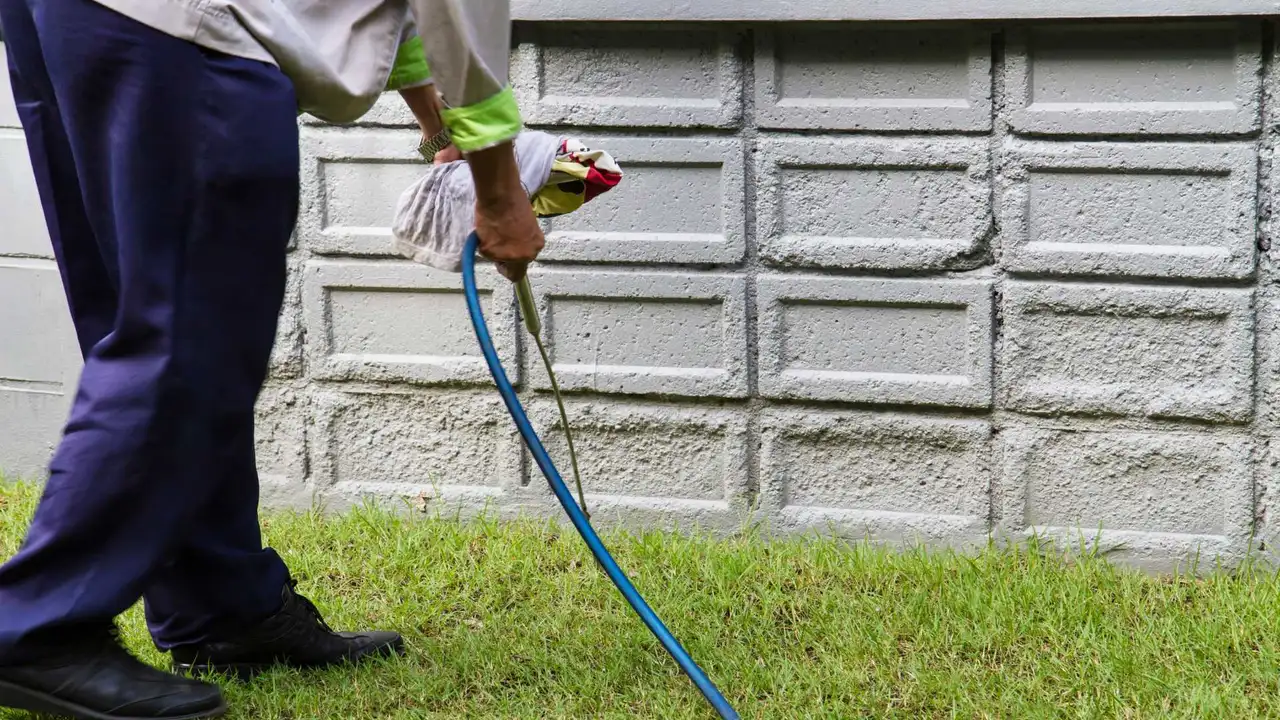
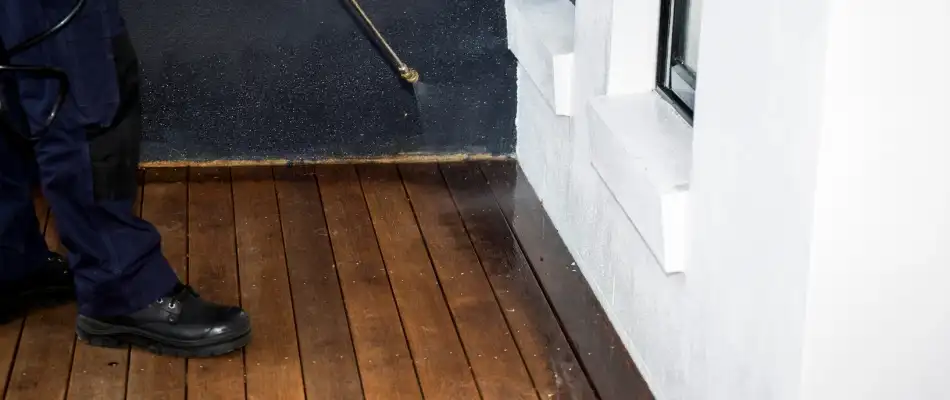
Effective pest control is not a matter of spraying where you saw something. It requires treating a continuous band around the entire foundation, the full height of the wall where insects travel, the eaves and soffits, every door threshold and utility penetration, and an interior barrier at the places insects enter living space. On a typical metro home that is a great deal of linear footage.
A one gallon pump sprayer holds enough product to cover a fraction of that at label rate, which means refilling repeatedly and, in practice, stretching the product thinner than the label calls for so it goes further. Under application is the single most common reason a DIY treatment disappoints, and the homeowner usually concludes the product did not work when the real issue was rate.
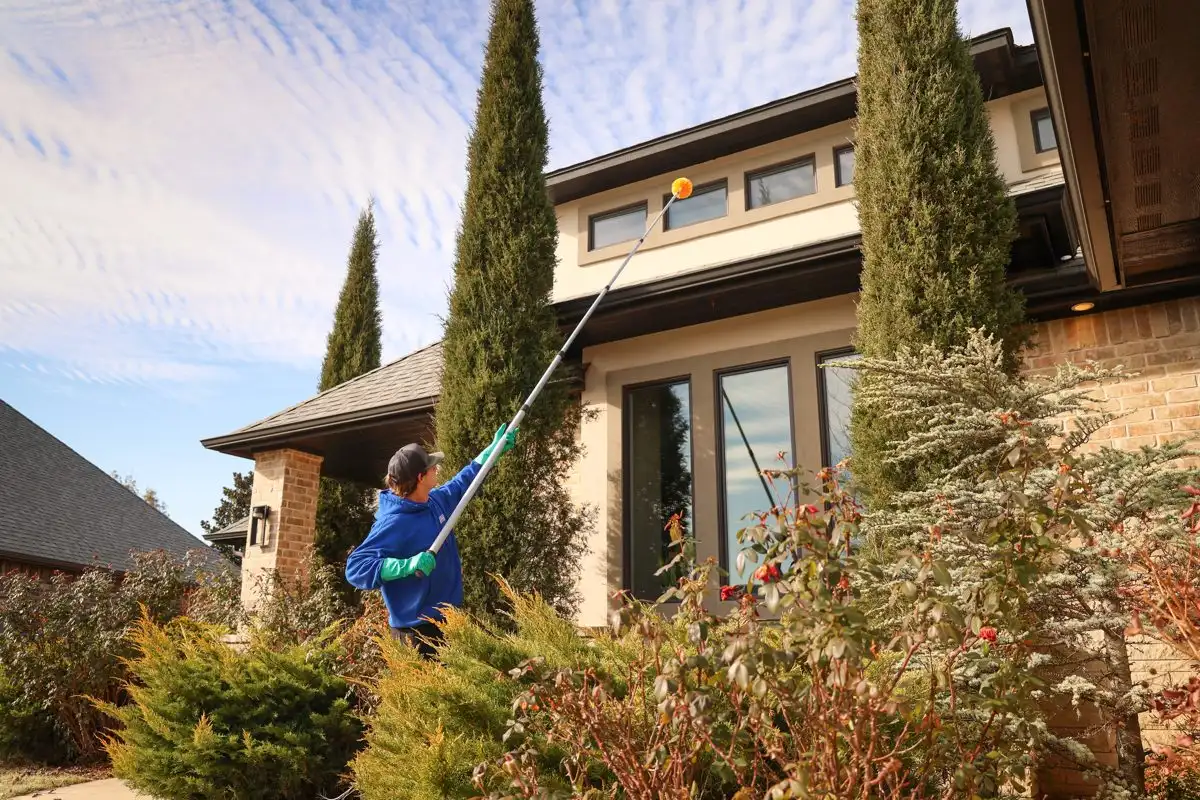
There is also the part that is simply hard to reach. Soffits and eaves on a two story home need extension equipment. Treating the full perimeter of a home with tight foundation plantings, a gated yard, and a sloped lot is genuinely awkward work. Skipping the hard sections leaves exactly the gaps the population will find.
Diagnosis Matters More Than Product Selection
The third difference is the least visible and often the most expensive.
Knowing what you are dealing with determines what the correct response is. Millipedes and pillbugs in a bathroom point to a moisture problem, and no amount of spraying fixes that if the underlying condition remains. Heavy webbing in the eaves means flying insects are congregating there, which means the useful treatment targets the food supply rather than just the spiders. Crickets in a garage usually trace back to the door seal and the mulch line rather than to the garage itself.
A technician who walks hundreds of properties develops pattern recognition for this, and the value is not just in treating correctly. It is in knowing when treatment is not the answer at all, and telling you to fix the downspout or replace the door sweep instead.
Most homeowners who have fought the same problem for three consecutive seasons are not using the wrong product. They are treating a symptom whose cause nobody has identified.
The Real Cost of Doing It Yourself
The savings are real, but they are narrower than most people expect once the full picture is on the table.
A season of doing this properly means a quality pump sprayer, a concentrate that actually has useful residual, granular product for the landscape band, aerosol for interior spot work, and replacement materials for exclusion. Doing it at label rate, at the correct interval, across a full perimeter, means repurchasing concentrate through the season rather than buying once.
Then there is the time. Treating a full foundation perimeter, eaves, and interior properly is most of a Saturday, and doing it on the right schedule means repeating that several times a year rather than once. For households where weekends are already committed, that is the number that matters more than the product cost.
And there is the risk of an ineffective attempt. When DIY goes well it saves real money. When it goes poorly, the money is spent, the Saturday is gone, and the problem is unchanged going into the coldest part of the year.
When DIY Is Genuinely the Right Call
We would tell you to handle it yourself in several situations, and we say this to people on the phone regularly.
If the issue is isolated and occasional, meaning a few spiders a season and nothing recurring, a can under the sink and good exclusion work is a completely adequate answer. If you have a small, simple property with an easy perimeter and no history of pressure, the scope is manageable.
If you enjoy the work, that counts for more than people give it credit for. Some homeowners find satisfaction in handling their own property and would rather learn to do it well than write a check, and that is a legitimate preference rather than a compromise.
And if the budget is genuinely tight this year, focused DIY plus thorough exclusion will get you meaningfully better results than doing nothing while you wait to afford service.
When It Makes Sense to Hand It Off
The other side of the line is fairly clear too.
If you are dealing with the same problem every fall despite treating it, that pattern is telling you something that another trip to the store will not fix. If your property backs to a greenbelt, creek, field, or undeveloped land, the pressure coming at your foundation is beyond what a homeowner sprayer keeps up with. If the house is two story with extensive soffit, the parts that matter most are the parts hardest for you to reach safely.
If you want the flying insect component addressed, that is difficult to replicate with retail products and equipment. Our approach treats the interior barrier, the perimeter and yard, and the surrounding airspace as one system, and the airspace piece in particular is not something a pump sprayer does.
And if the honest constraint is time rather than money, professional service converts most of a Saturday, several times a year, into a scheduled visit you do not have to be home for.
What to Do Next
If you are on the DIY side of that line, we would genuinely encourage you to spend your effort on exclusion first. Sealing door sweeps, screening weep holes, and pulling mulch back from the foundation produces a permanent result and makes whatever you spray work considerably better.
If you are on the other side of it, or you are not sure which side you are on, we are happy to look at the property and tell you honestly. Sometimes the answer is that your situation is manageable on your own and here is what we would do in your position. We would rather say that than sell you something you do not need.
We are a veteran owned company serving Oklahoma City and the surrounding metro, including Edmond, Norman, Moore, Yukon, Mustang, Midwest City, Del City, Bethany, Choctaw, Piedmont, The Village, Harrah, Newcastle, Blanchard, and Tuttle. Call (405) 735-1223 or request a quote at weedcontrolokc.com.