Pest Control
Why Crawling Pests Move Into Your Oklahoma City Home When Temperatures Drop
Elite Lawn Care • November 2026 • Oklahoma City, OK • 8 min read
Short Answer: When overnight lows in the OKC metro start falling into the 40s and 30s, insects that spent all summer living in your landscape beds, mulch, and turf begin looking for somewhere warmer. Spiders, crickets, millipedes, pillbugs, earwigs, and beetles do not suddenly appear inside in November. They were already living along your foundation, and the cold pushed them through the gaps they were always using. That is why the most effective interior pest control starts outside, at the perimeter, before the cold snap arrives. Here is what actually changes this time of year and what to do about it.
If you have noticed more spiders in the garage this month, or a cricket chirping somewhere behind the baseboard at eleven at night, or those small gray millipedes curled up on the bathroom tile, you are seeing something we see across the metro every November. Nothing about your housekeeping changed. The weather did.
Most homeowners we talk to assume an indoor pest sighting means something got in from outside that week. The reality is usually less dramatic and more useful to know: those insects have been living within a few feet of your foundation since July. Cold weather simply changed their behavior, and your house is the warmest thing in the neighborhood.
Here is what is actually happening, and why the timing of your treatment matters more than almost anything else you can do.
What Actually Changes in October and November
Insects are cold blooded, which means their activity level is set by the temperature around them rather than by anything internal. Through an Oklahoma summer, that works in their favor. Warm soil and warm air keep them active, feeding, and reproducing in your landscape beds without any reason to come closer to the house.
As overnight lows in the OKC metro start dropping into the 40s and then the 30s, that changes. Their metabolism slows, and the drive shifts from feeding to finding somewhere survivable. In entomology this is often called overwintering, and for most of the crawling insects in our area it means locating a protected space that stays above freezing and holds some humidity.
Your home is an extremely attractive answer to that problem. The foundation radiates heat. The crawl space and garage stay well above outdoor temperatures. Weep holes, utility penetrations, and door thresholds all lead somewhere warmer. From an insect's perspective, walking toward your house in November is simply walking toward survival.
The Pests We Are Actually Finding Indoors This Time of Year
The interior sightings we get called about in November are fairly predictable, and they are almost entirely crawling insects rather than the flying pests that dominate summer calls.
Spiders are the most common by a wide margin. They follow their food supply, so when other insects move toward the foundation and into the structure, spiders follow them. A sudden increase in webbing in garage corners, around window frames, and in the angles of the ceiling usually means the insects they eat have already moved in.
Crickets are the ones homeowners find hardest to ignore, largely because of the noise. They work their way into garages, utility rooms, and crawl spaces, and a single cricket behind drywall can keep an entire household awake. Millipedes and pillbugs show up in bathrooms, laundry rooms, and along the base of exterior walls because they are looking for moisture as much as warmth, and they tend to die shortly after coming inside because our homes are too dry for them.
Earwigs and various beetles round out the list. Earwigs move in from mulch and leaf litter right against the foundation. Beetles often arrive by a different route entirely, which we cover in a separate article about items carried in from outside.
How They Are Getting In
The entry points that matter are rarely dramatic. Most homeowners picture a gap they would notice, and the real openings are usually the ones nobody looks at.
Door thresholds are the single most common. A door sweep that has compressed or worn by even a quarter of an inch leaves a continuous gap along the entire width of the doorway. Garage doors are worse, because the rubber seal at the bottom hardens and shrinks with age and because the corners almost never seal completely even when the seal itself is in good shape.
Beyond doors, the list is familiar once you start looking: weep holes in brick veneer, the gap where a dryer vent or hose bib or air conditioning line set passes through the wall, cracks in the foundation slab at the perimeter, gaps where siding meets trim, and unscreened or torn soffit and attic vents. None of these need to be large. A spider or a young cricket can use an opening you would struggle to fit a pencil into.
This is also why a purely interior approach frustrates so many homeowners. Treating inside a room addresses the insects in that room. It does nothing about the population standing in the mulch two feet outside the wall, waiting for the next cold night.
Why Sightings Spike Right After the First Cold Snap
One pattern we see every single year is worth naming, because it catches people off guard. Interior sightings do not increase gradually through the fall. They spike, usually within a day or two of the first significant temperature drop.
The reason is that the trigger is shared. Every insect along your foundation experiences the same cold front at the same time, and they all respond the same way on the same night. A homeowner who had seen essentially nothing all month suddenly finds four spiders and two crickets over a weekend and reasonably concludes that something has gone badly wrong.
Nothing has gone wrong. What happened is that a population that was already there became visible all at once. Understanding that changes the response from panic to timing, and timing is the part you can actually control.
Why the Best Interior Results Start Outside
This is the piece we spend the most time explaining, and it is the difference between homeowners who fight the same battle every winter and homeowners who stop thinking about it.
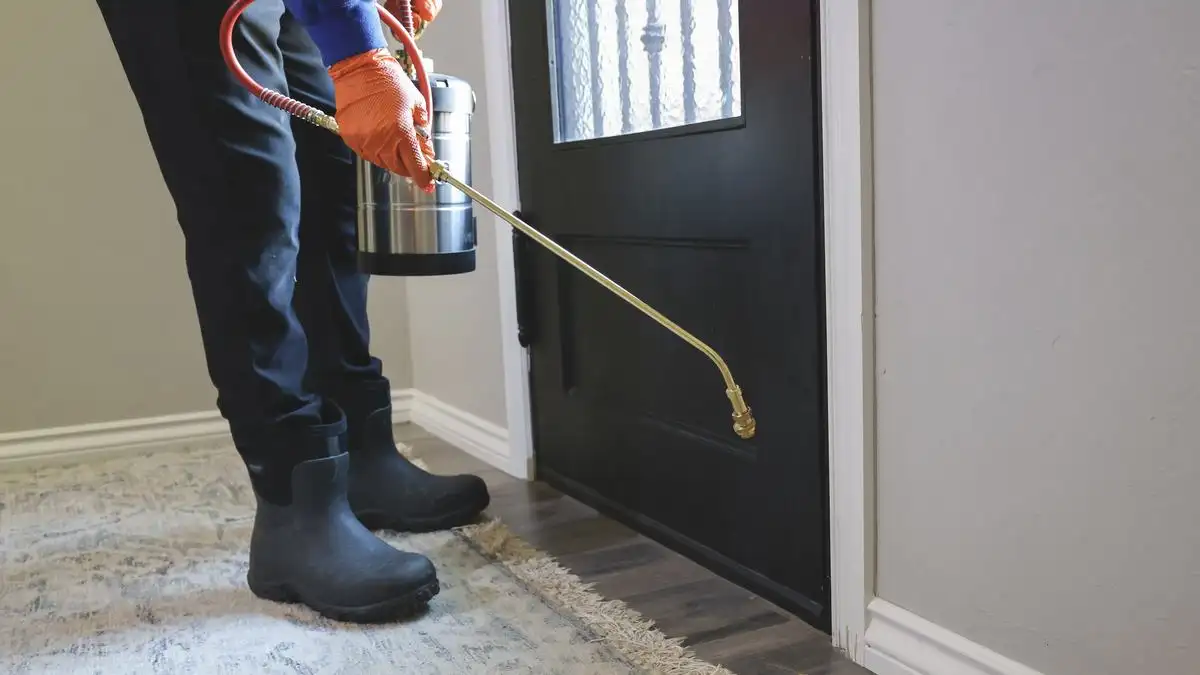
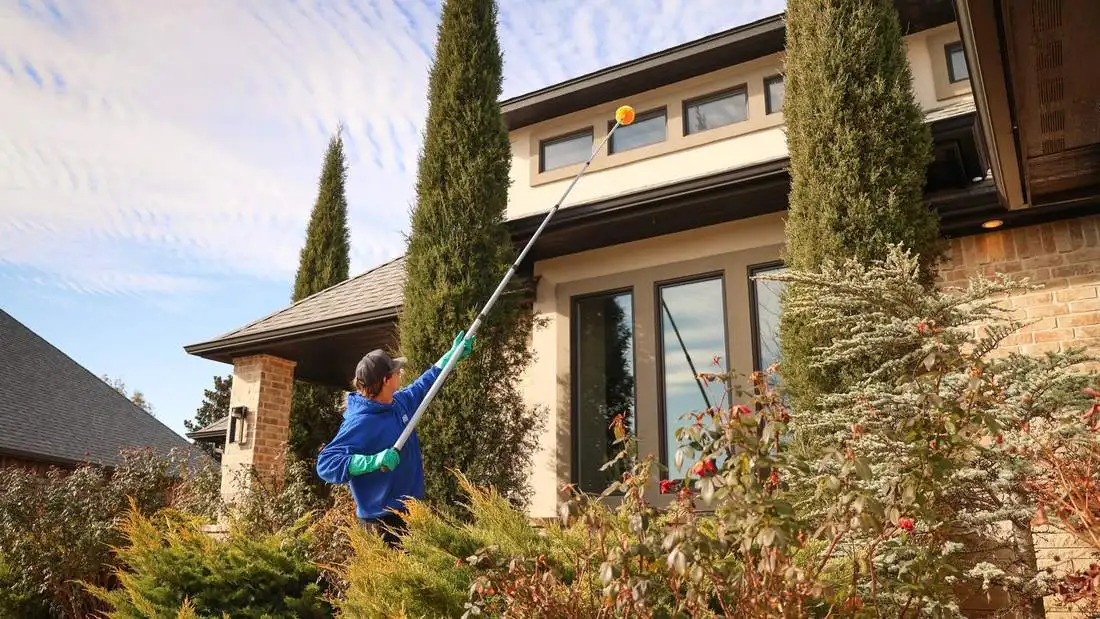
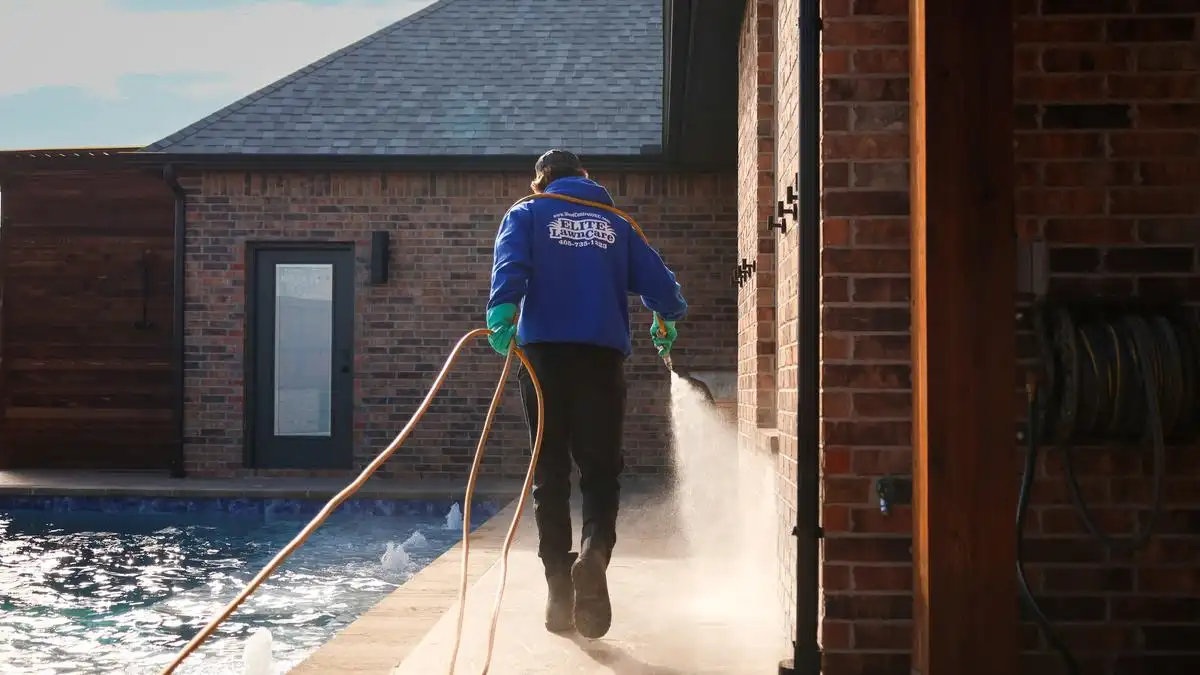
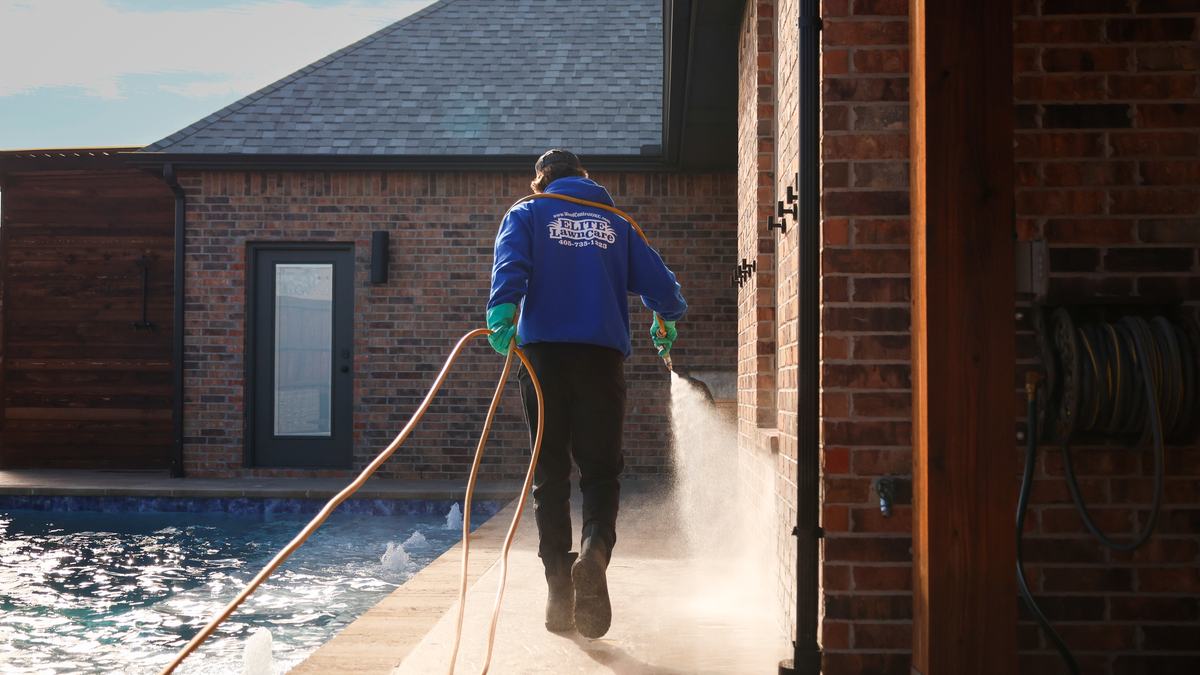
Our pest control approach works in three parts that are designed to function together. There is an interior barrier treatment, which targets and prevents common crawling insects from entering and establishing themselves in your living spaces. There is a perimeter and yard treatment, which addresses the population before it ever reaches the wall. And there are specialized treatments to the surrounding airspace that significantly reduce flying insects.
The interior work matters, but it is the last line rather than the first. When the perimeter is treated, the number of insects that ever reach a threshold or a weep hole drops sharply, which means the interior barrier is handling a much smaller number of arrivals. Homeowners who only ever treat inside are asking one defensive layer to do the work of three, and the results reflect that.
The Timing Question Most Homeowners Get Wrong
The instinct is to call after the sightings start. That is understandable, and we are glad to help at that point, but it is worth knowing what the calendar does to your results.
Treating after the cold snap means treating after a portion of the population has already moved into wall voids, crawl spaces, and attic spaces where they are harder to reach and where they may stay dormant until spring. Treating before means intercepting them while they are still outside, still active, and still crossing a treated surface to get where they are going.
For most OKC metro homes, that argues for getting the fall perimeter and interior work done while daytime temperatures are still comfortable and before the first hard cold front. In our area that window is generally through October and November. If you are reading this after the first cold night, the treatment is still worth doing, because the population outside has not gone anywhere and the next cold front will push another wave toward the same gaps.
What You Can Do Between Treatments
Professional treatment does the heavy lifting, but a few things on the homeowner side make a real difference, and none of them cost much.
Pull mulch, leaf litter, and dense ground cover back from the foundation so there is a dry band of a few inches against the wall. Most of the insects we have described live in exactly that damp organic layer, and moving it back moves them back. Stack firewood away from the house rather than against it, and keep it up off the ground.
Replace worn door sweeps and check the garage door seal, particularly at the corners. Address any exterior moisture problem you can see, including a downspout dumping against the foundation or an irrigation head spraying the wall. Crawling insects follow moisture, and a wet band of soil along your foundation is an invitation.
Inside, reducing clutter in garages, utility rooms, and storage closets removes the harborage that lets a small number of insects become an established population.
What to Do Next
If you are seeing crawling insects inside right now, the useful next step is not another can of spray under the sink. It is getting the perimeter addressed so the population outside stops arriving, and getting the interior barrier in place so the ones that do arrive do not establish.
We are a veteran owned company serving Oklahoma City and the surrounding metro, including Edmond, Norman, Moore, Yukon, Mustang, Midwest City, Del City, Bethany, Choctaw, Piedmont, The Village, Harrah, Newcastle, Blanchard, and Tuttle. Give us a call at (405) 735-1223 or request a quote through weedcontrolokc.com and we will walk your property, identify the entry points that are actually being used, and tell you honestly what your home needs and what it does not.
The homeowners who stop having a November pest problem are almost never the ones who found a better spray. They are the ones who moved the fight back outside where it belongs.