Pest Control
Why Pests Move Into Oklahoma Homes in October, and What Stops Them
Elite Lawn Care • October 2026 • Oklahoma City, OK • 7 min read
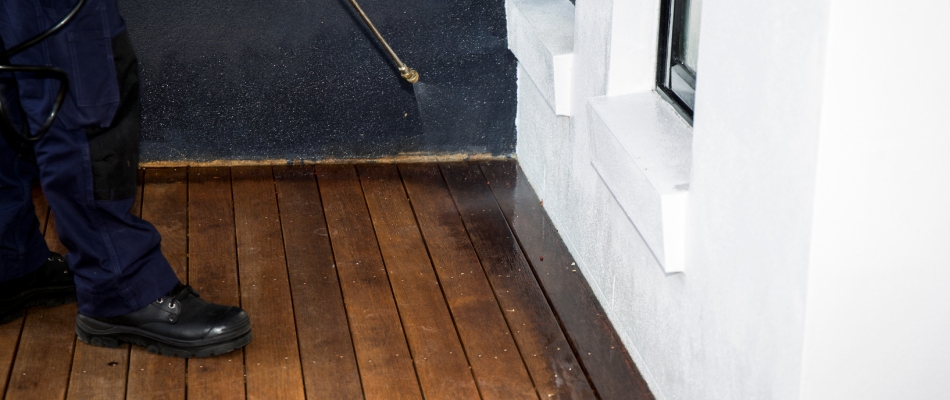
Short Answer: As nights drop into the fifties and forties, insects and rodents that lived outdoors all summer start looking for somewhere warm, and your foundation is the nearest option. An exterior perimeter treatment puts a treated band around the base of the house and the entry points pests actually use, intercepting them before they get inside. It works best applied before the weather turns rather than after you see something indoors, and it works far better combined with sealing the gaps that let them in.
There is a fairly predictable rhythm to pest calls in Oklahoma, and October is when it changes character. Through the summer, most of what we treat is a yard problem. Then the first real cool snap arrives, and within a week or two the calls shift indoors. Spiders in the garage. Crickets in the basement. Something scratching in the wall at night.
None of that is a sign your house is dirty, and it is not bad luck. It is a seasonal migration that happens every year on roughly the same schedule, and it is one of the few pest problems you can genuinely get ahead of. Here is what is happening and what actually interrupts it.
What Changes When It Cools Off
Most of the insects around your home are cold blooded, meaning their body temperature and activity track the air around them. All summer, outdoor conditions suit them fine. As nights fall into the fifties and then the forties, outdoor living gets harder, and the instinct that keeps them alive is to find somewhere warmer and more stable.
Your house is a heat source with a foundation touching the ground, gaps around every pipe and wire, doors that open several times a day, and a garage that is essentially a cave. From an insect's perspective it is the most attractive structure in the neighborhood.
Rodents run the same calculation with more determination. A mouse needs a gap about the width of a pencil to get through, and a rat needs one about the size of a quarter. They are also looking for food and nesting material, which a house supplies abundantly.
The timing is tied to temperature rather than the calendar, which is why some years the shift comes in late September and others it holds off until November. Watching the overnight lows is a better predictor than any date we could give you.
What Comes Inside Around Here
The cast is fairly consistent across the Oklahoma City metro and over in the Siloam Springs area, though the mix varies by neighborhood and by how much mature landscaping surrounds a house.
Spiders are the number one fall call, and in Oklahoma that conversation includes brown recluse, which is genuinely established across the state. They prefer undisturbed spaces, so garages, closets, basements, storage boxes, and the backs of shelves are where people encounter them. Most spiders coming indoors are harmless, but the presence of recluse in our region is a legitimate reason to take fall spider activity seriously rather than shrugging at it.
Crickets arrive in numbers, especially in years with a wet late summer, and they are noisy enough that people notice immediately. Cockroaches move toward warmth and moisture, concentrating around kitchens, water heaters, and bathrooms. Mice show up in garages, pantries, and wall voids, and the first sign is usually droppings or sound rather than a sighting.
Overwintering nuisance insects round it out, including boxelder bugs and various beetles that cluster on warm south facing walls in the afternoon and work their way into siding gaps and attic spaces.
What a Perimeter Treatment Actually Does
An exterior treatment puts a treated band around the base of the structure and on the surfaces pests cross to reach it. That means the foundation itself, a strip of ground along it, around door thresholds and garage openings, and at the entry points where utilities pass through the wall.
The idea is interception. Rather than waiting for something to get inside and treating indoors, you treat the route. Most crawling pests cross the foundation line at some point, and an exterior band gives them a reason not to complete the trip.
Eaves, soffits, window frames, and the undersides of overhangs matter too, since spiders in particular build where flying insects gather and that means anywhere near a light. Treating those areas and knocking down existing webbing does more for a spider problem than treating ground level alone.
The reason this is an exterior service is that it keeps the treatment outside the living space. That is generally preferable for a household with kids and pets, and it addresses the problem earlier in the sequence, before anything has established itself indoors.
Timing Matters More Than Product
The single most useful thing we can tell you about fall pest control is that it works substantially better as prevention than as a reaction.
A treatment applied before the weather turns intercepts pests during the migration. A treatment applied after you have already seen mice in the pantry is dealing with an established population inside a structure, which is a harder and slower problem with a different set of tools.
October is generally the right month in our area. Warm enough that pests are still active outdoors and moving through treated areas, late enough that the migration is beginning. Waiting until you notice something indoors means the season has already gotten ahead of you.
This is also why a single treatment is not usually the whole answer. Exterior products break down with sunlight, rain, and irrigation, so protection is a window rather than a permanent state, and most properties do better with treatment on a schedule than with one visit made in reaction to a problem.
What Treatment Cannot Do By Itself
We would rather be straight about the limits than have you expect more than a treatment delivers.
A perimeter treatment does not seal your house. If there is a half inch gap under the garage door, a missing weather strip, or an unsealed hole where a cable enters the wall, pests will keep finding it. Treatment reduces pressure at those points. Sealing removes them.
The items worth walking around and checking are straightforward. Door sweeps and weather stripping, particularly on the garage. Gaps around pipes, cables, and dryer vents, which fill well with steel wool and sealant. Torn window screens. Foundation cracks. A gap you can slide a pencil into is a mouse door.
The landscape side matters too, and this is the part we notice most on the properties we visit. Mulch piled against the foundation, shrubs touching the siding, firewood stacked against the house, and leaf litter along the foundation line all create sheltered highways leading directly to your wall. Pulling mulch back a few inches and trimming shrubs off the siding genuinely reduces pressure.
Rodents in particular need the structural side addressed. You cannot treat your way out of an open entry point, and anyone suggesting otherwise is selling you repeat visits.
What the Visit Looks Like
An exterior service is not complicated and it helps to know what to expect. A technician walks the full perimeter first, looking at entry points, conducive conditions, and evidence of what is already active, then treats the foundation band, entry points, eaves and overhangs, and door and garage thresholds.
Existing spider webbing gets knocked down, which matters because removing webs both clears what is there and tells you on the next visit whether activity is continuing or has stopped.
You do not generally need to be home, and you do not need to empty cabinets or leave the house the way an interior treatment sometimes requires. Most exterior visits take under an hour on a typical residential property.
What you should get afterward is a note on what was found, because the conducive conditions a technician spots during the walk are often more valuable than the application itself.
What to Do Next
Walk your own foundation this week with a flashlight and look at it the way a mouse would. Check the garage door seal, the gaps where utilities enter, the dryer vent, and the corners where siding meets the slab. Note anything you can slide a pencil into.
Pull mulch back a few inches from the foundation, trim shrubs so they are not touching siding, and move firewood away from the house. Those three take an afternoon and they reduce pressure every year rather than just this one.
Then get the exterior treated before the cold really arrives rather than after you have seen something indoors. Prevention and reaction are genuinely different jobs, and the first is easier and cheaper.
If you would rather have someone walk the property, treat the perimeter, and tell you which gaps actually matter, we are here for that. Elite Lawn Care is veteran owned and serves the Oklahoma City metro along with Siloam Springs, Arkansas. Call 405-735-1223 or visit weedcontrolokc.com to schedule.